
Outsourcing budgets leak quietly in game production. A contractor delivers a character model that's a near-match for something the studio commissioned eighteen months ago, buried in a shared drive nobody thought to search. Multiply that across characters, environments, props, and UI kits, and a studio ends up paying repeatedly for work it technically already owns.
Digital asset management (DAM) fixes this by making a studio's entire back catalog searchable before a single new brief goes out, so reuse becomes the default instead of an afterthought.
The problem: a leaky outsourcing pipeline
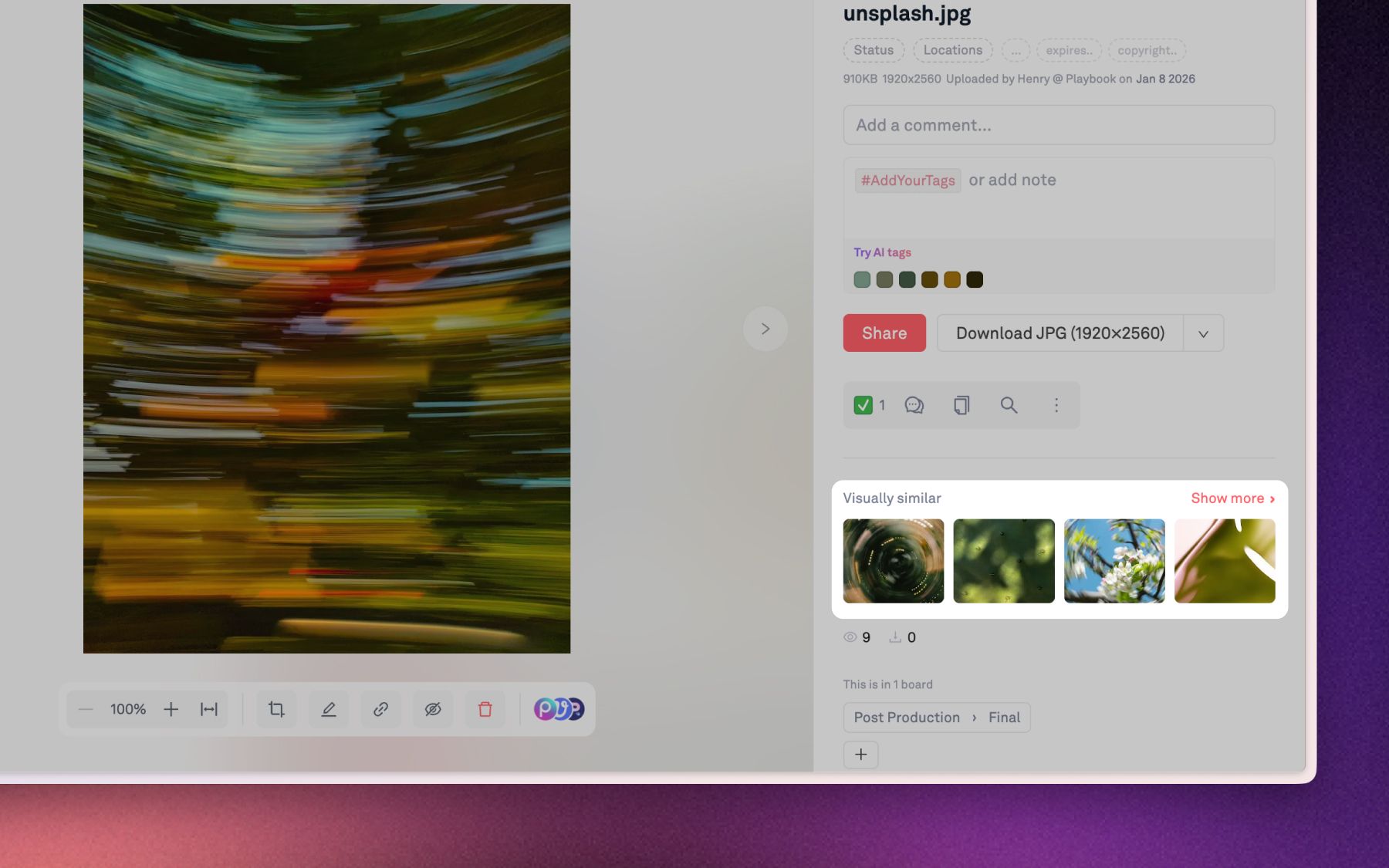
Game studios lose money to this pattern in a few predictable ways:
- Duplicate commissions, when new contractors deliver assets the studio already paid for, because nobody could find the original.
- No searchable archive, with assets scattered across project folders, Dropbox links, and vendor hard drives with no way to check "do we have this already?"
- Slow brief approval, as outsourcing coordinators burn hours digging for reference before a brief can even go out.
- Vendor drift, where a missing shared source of truth leads vendors to reinterpret style guides, generating revisions that shouldn't have been necessary.
Studios using Playbook's asset intelligence to catch this before it happens report an average 30% reduction in duplicate asset commissions, and roughly four hours saved per brief by reusing existing reference instead of starting from scratch.
How game studios win with Playbook
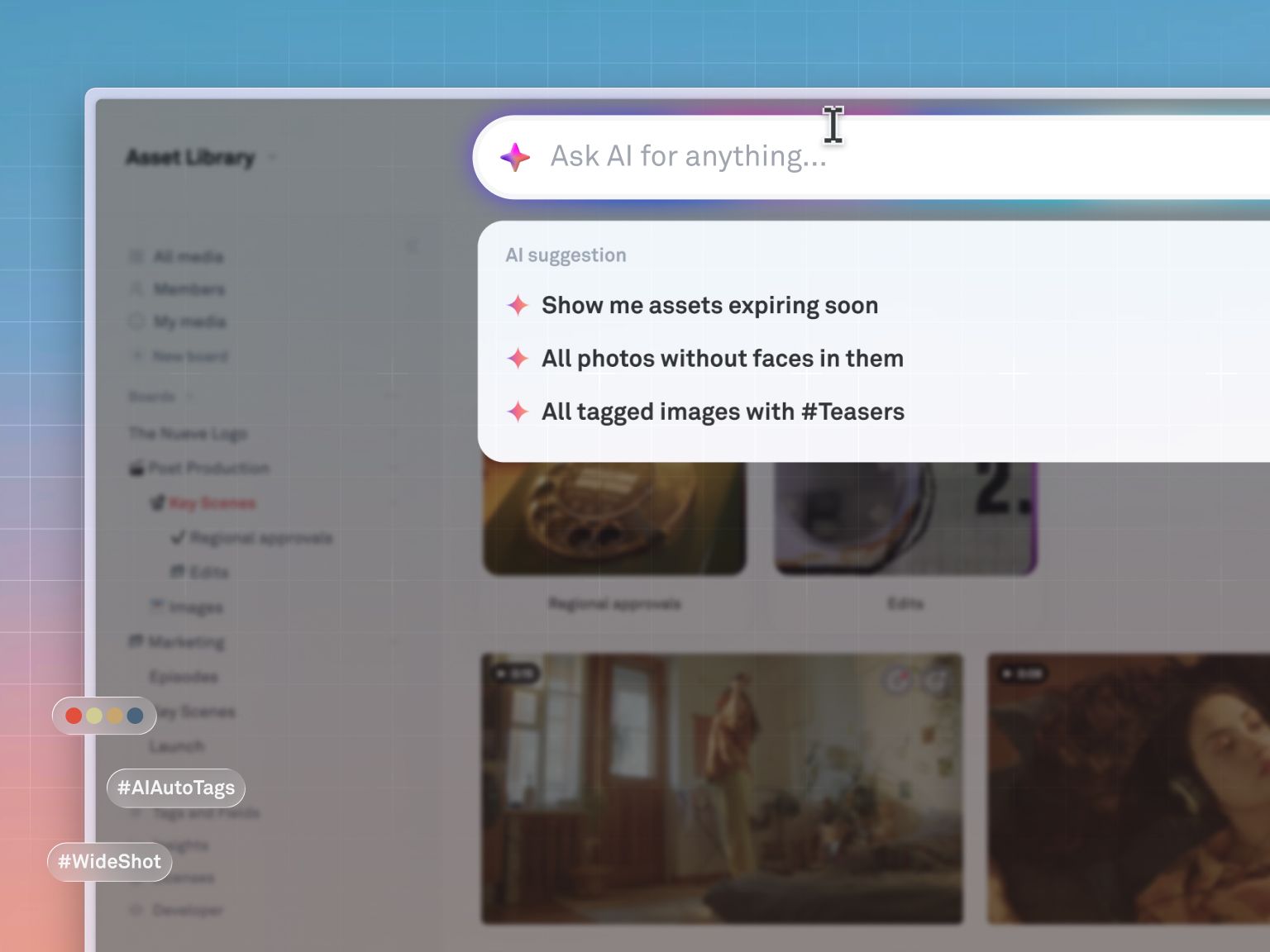
- AI auto-tagging on every upload. Characters, environments, props, and UI kits get indexed across 16+ dimensions the moment they land in the library, so visual search surfaces near-matches instead of relying on exact filenames.
- Natural language search before you spend. Before a brief goes to a vendor, a 30-second search for something like "fantasy armor, worn, female silhouette, dark palette" tells the team whether reuse is possible before any budget gets touched.
- Spatial 3D review, powered by Miris. Instead of compressing a model into a flat turntable render that strips out material and geometry detail, Playbook streams the live 3D asset to every reviewer, on any device, at once.
- Reusable asset discovery that compounds. The longer a studio uses Playbook, the less it needs to commission from scratch, since the library itself becomes an asset that grows more valuable every quarter.
- Vendor access without the admin overhead. Studios link multiple libraries under one organization, scope access for each external partner, and revoke it cleanly the moment a vendor relationship ends, the same enterprise-grade access control Playbook builds for large marketing orgs.
Studios producing cinematics or marketing footage alongside game assets often extend the same library into Playbook's media and entertainment workspace, since shot-level search and 3D review work identically across both.
Game studio example: skipping a commission that didn't need to happen
Picture an art director briefing a new environment vendor on a set of "modular sci-fi corridor props, low poly" for an upcoming level. Before Playbook, that brief goes straight to the vendor, since nobody has time to dig through three years of project folders to check what already exists.
With a searchable library, the art director runs that exact query first. A close match turns up from a project two years prior, gets adapted in an afternoon, and the vendor brief never needs to go out at all. That's one commission, and one round of vendor revisions, that simply doesn't happen.
FAQ
What is DAM for game studios?
It's a searchable library that indexes a studio's characters, environments, props, and other art assets by what they actually look like, so teams can check for reusable work before commissioning anything new.
How does this actually reduce outsourcing costs?
By surfacing near-matches to existing assets before a brief goes to a vendor, studios avoid recommissioning work they already paid for. Playbook data shows this typically reduces duplicate commissions by around 30%.
Can a studio review 3D models without exporting a video first?
Yes. Playbook's integration with Miris streams the actual 3D asset, not a flattened render, directly in the browser, so reviewers on any device see the same full-fidelity model and can pin feedback to an exact surface.
What does Playbook cost for a game studio?
Playbook's Team plan starts at $20 a month per member (billed annually) and includes AI tagging and natural language search. Larger studios typically move to Business, at a flat $400 a month for unlimited members. Confirm current pricing on the pricing page.
Set up takes one day. Savings start immediately. Book a studio demo.