
TL;DR: Time wasted searching for files is the largest line item on a creative team's budget that never appears on an invoice. Published research puts knowledge-worker search time at roughly 1.8 hours a day. Applied conservatively to a creative team, that is about $12,000 per person a year in lost hours, before you count the duplicate shoots and recreated work that follow a file nobody could find. This report models that cost, shows the data behind it, and explains how findability wins the hours back.
You are not paying for storage. You are paying for the hours your team spends being librarians.
That is the reframe this report is built on. Storage is cheap and getting cheaper. The expensive thing is a senior creative spending Thursday afternoon hunting for a hero shot that already exists, then reshooting it because they gave up. If you run a growing library, you can schedule a demo and see what findability does to that number.
How much time is wasted searching for files?
Knowledge workers lose close to a fifth of the workweek looking for information, and creative teams sit at the worst end of that curve. The most-cited figure comes from the McKinsey Global Institute, which found that employees spend roughly 1.8 hours a day, about 9.3 hours a week, searching and gathering information. That is nearly one full day out of every five spent finding the inputs to the actual work rather than doing it.
The numbers vary by study and by how each one measures, so treat them as a range, not a verdict. Here is what the research says at the time of writing.
| Source | What it found | What it measured |
|---|---|---|
| McKinsey Global Institute (2012) | ~1.8 hours a day, 9.3 hours a week, close to 19% of the workweek | Time searching and gathering information |
| IDC, widely cited | ~2.5 hours a day, roughly 30% of the workday | Time knowledge workers spend searching for information |
| Adobe Acrobat survey (2023) | 48% struggle to find documents quickly; 95% have felt frustrated searching | Digital document findability at work |
A fair caveat: these studies measure all knowledge work, not creative file-hunting specifically. A designer searching for "the golden-hour drone shot from the spring campaign" is not the same as an analyst searching a shared drive for a spreadsheet. But the direction is not in doubt, and creative libraries are harder to search than document folders, because a creative remembers what an image looks like, not what someone named the file. Playbook's own reporting backs the size of the problem: 96% of users report spending less time hunting for files after switching.
What does file-hunting actually cost a creative team?
Time wasted searching for files converts into a hard annual number, and for most creative teams that number lands in the mid five figures per person. We built a deliberately conservative model, the Lost-Asset Tax, so you can plug in your own inputs. It starts below the McKinsey figure on purpose: assume a creative spends just 5 hours a week hunting for existing assets, not the 9.3 hours the broad research suggests.
The Lost-Asset Tax: what file-hunting costs per creative, per year
| Input | Conservative assumption |
|---|---|
| Hours per week hunting for existing files | 5 |
| Working weeks per year | 48 |
| Hours lost per creative, per year | 240 |
| Fully loaded creative cost | ~$50 per hour |
| Lost-Asset Tax, per creative, per year | ~$12,000 |
| Same tax across a 10-person team | ~$120,000 |
| Same tax across a 25-person team | ~$300,000 |
Read the table as a floor, not a ceiling. It uses 5 hours a week when the research points higher, 48 weeks when many teams work more, and a $50 loaded rate that is modest for senior creative talent in most markets. Raise any input and the tax climbs fast. This is the cost of disorganized assets stated the way a CFO would state it: a recurring, invisible expense that scales with every hire and never shows up as a line on a bill.
The point of the model is not the exact dollar figure. It is that findability is a creative team productivity lever, not a nice-to-have. Halve the hours and you have funded a new role. Schedule a demo and we will run the same math against your headcount.
Why do disorganized assets cost more than the lost hours?
The lost hours are only the visible half of the cost, because a file nobody can find often gets made twice. When a search fails, the work does not stop. Someone reshoots the product, re-cuts the edit, or rebuilds the deck from scratch, and now you have paid for the same asset two or three times over. That is the compounding cost of disorganized assets, and it does not appear in any search-time study because it is filed under "production," not "search."
It shows up in three predictable ways:
- Duplicate shoots and recreated work. The asset existed. Nobody found it. So the team commissioned it again, at full production cost.
- Wrong-version work. Someone finds a file, just not the approved one, and a campaign ships with last quarter's logo or an unlicensed image. Opendoor's design team named this directly: multiple versions circulating, with no clear line between approved and draft.
- Storage bloat that hides the good asset. The same file, copied into five boards and re-uploaded twice, buries the one you want under near-identical clutter and inflates the storage bill you are paying to keep it.
Creative operations efficiency is mostly the discipline of not paying for the same work twice. A system that makes the right asset the easy one to find is how you stop.
How do you win the hours back with findability?
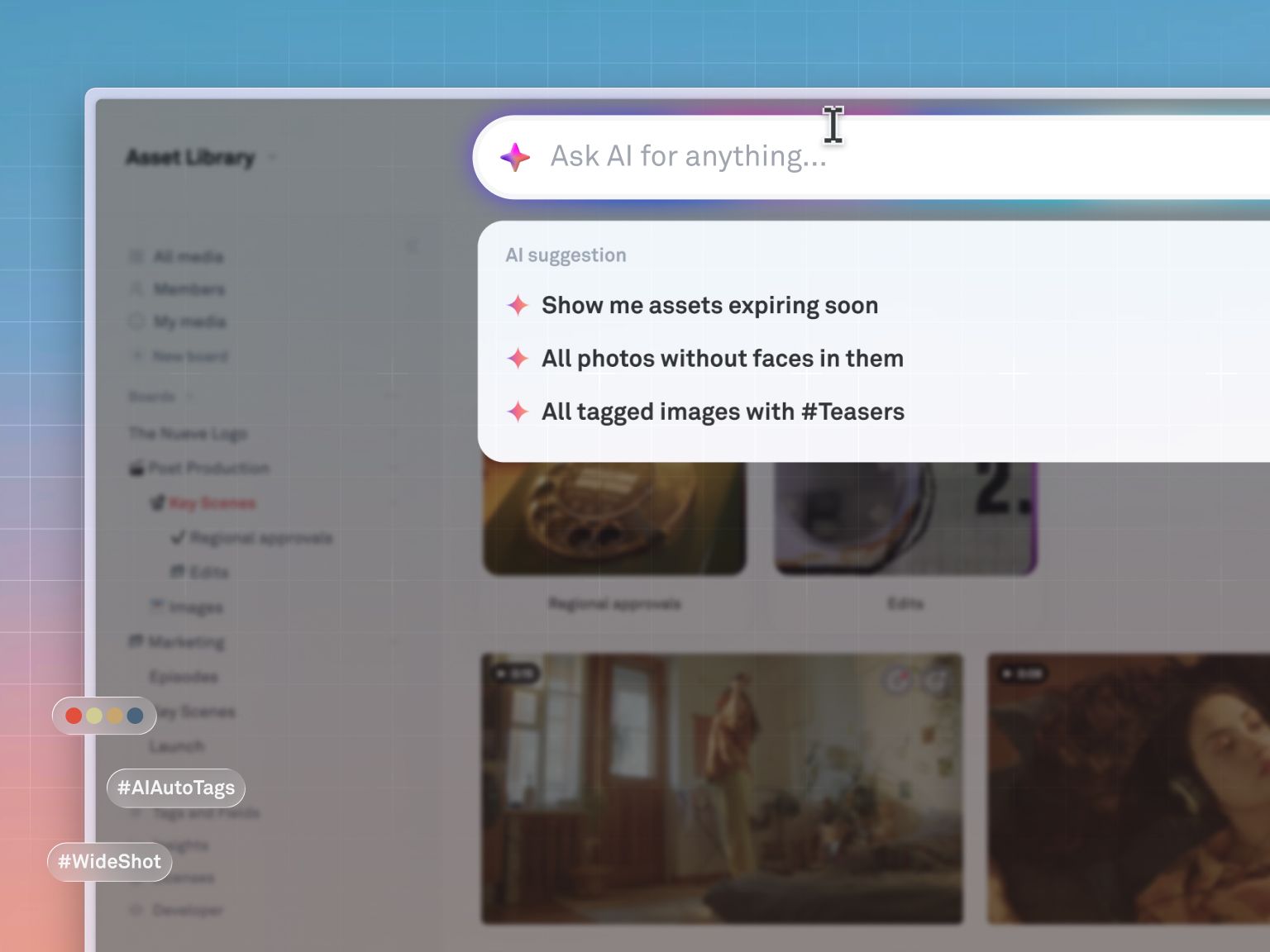
You win the hours back by making the library answer to plain language and by keeping it clean automatically, so the right file is the easy one to reach. Findability is the whole game, and it has three moving parts.
Search by what the work looks like, not what it was named. Playbook's AI-powered search understands the actual visual content of every image and video, so a query like "moody product shots on a dark background" returns the asset even when no one tagged it that way. This is shipped on every plan. The conversational assistant that acts on those results, part of Playbook Intelligence, is currently in private beta, so treat the chat layer as new rather than settled. The search itself is the core findability engine.
Keep the library lean without policing it. Playbook fingerprints every file by content on upload and merges byte-identical duplicates automatically, so you do not pay to store the same asset twice. Copies across boards reference the same stored file and consume no extra storage. That smarter storage is why the good asset stops hiding behind five copies of itself.
Measure the recovery. The Insights dashboard, available on Team plans and up, reports views and downloads over time, your most-used boards and assets, and the storage saved through automatic deduplication. It turns "we feel more organized" into a number you can show a stakeholder, and it is where you watch the Lost-Asset Tax come down.
What do real teams recover when files become findable?
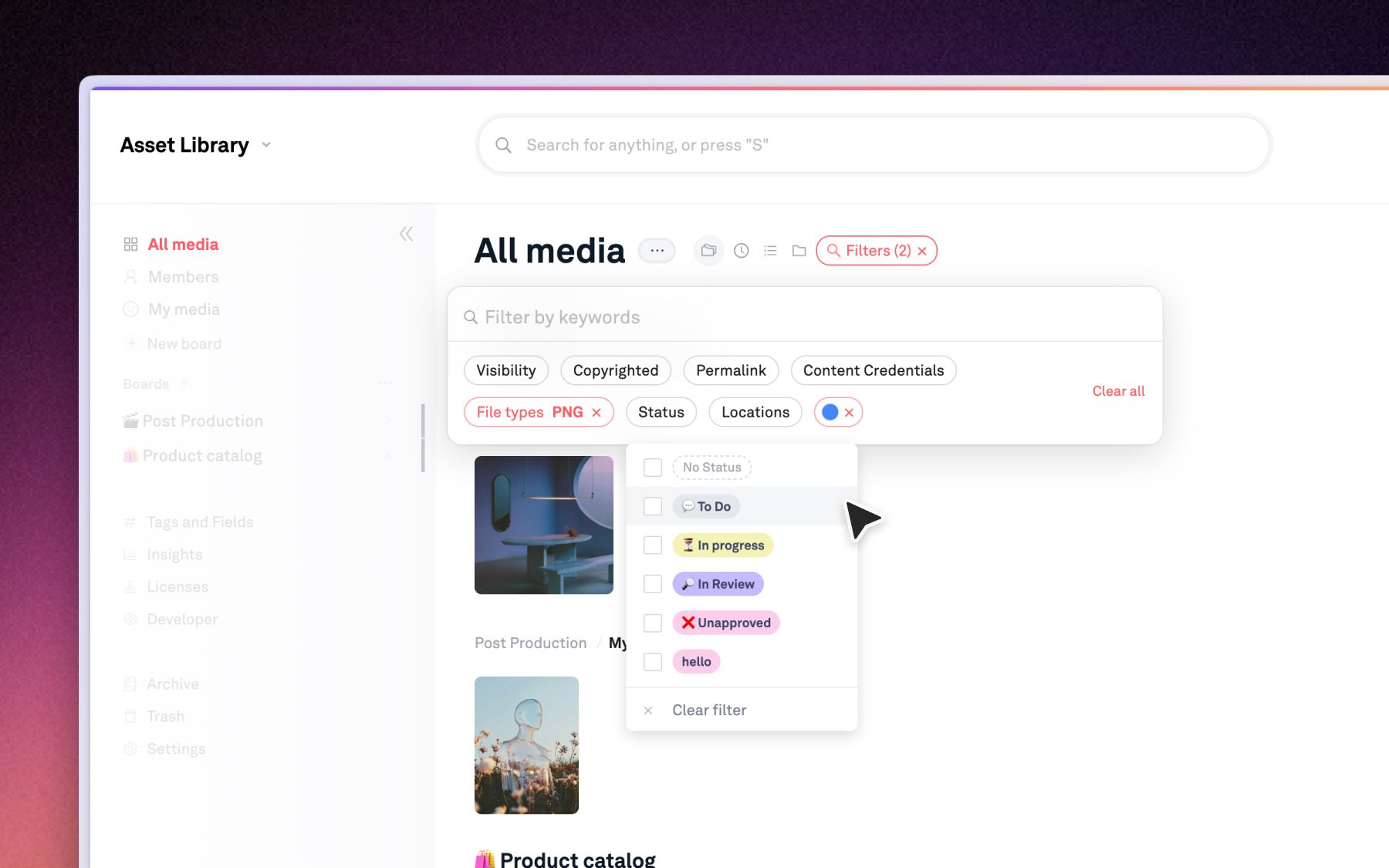
Teams that fix findability report the search time falling by half or more, which is exactly what the Lost-Asset Tax predicts. The proof is in the customer numbers, not just the model.
Opendoor grew from 100 to more than 2,500 employees and built a single source of truth for over 10,000 brand assets in Playbook. The design team cut the time spent searching for brand assets by 50 to 70%, and stopped fielding the same Slack requests for logos and templates. As designer Nicolas Solerieu put it, "We started spending a lot of time digging and looking for assets." Playbook ended the digging.
YMCA of Snohomish County runs six branches and a 20-person team on 24,000 stored assets, with camp staff uploading photos in real time from mobile. The result was 5 to 10 hours saved every week during summer camp season, and the near-elimination of stock photos, because the real asset was finally findable. Director of Technology Michael Rinner said Playbook "was absolutely the best value and the most modern user experience."
This is the pattern behind Playbook's own reporting: 5,000-plus teams with 10 or more members, and organizations like Warner Bros. and Moet Hennessy that started with one person and rolled Playbook out company-wide.
Frequently asked questions
How much time is wasted searching for files at work?
Research puts it at roughly 1.8 hours a day, about 9.3 hours a week, for knowledge workers, per the McKinsey Global Institute. That is close to a fifth of the workweek. Creative teams tend to run higher, because visual assets are harder to locate by filename than documents are.
How do you calculate the cost of disorganized assets?
Multiply the hours a person loses searching each week by their working weeks and their fully loaded hourly cost. At a conservative 5 hours a week, 48 weeks, and a $50 loaded rate, that is about $12,000 per creative per year, before duplicate shoots and recreated work are counted.
What is the fastest way to reduce time lost searching for files?
Make the library searchable by content instead of filename. AI-powered visual search returns an asset from a description of what it looks like, which is how creatives actually remember their work. Pair that with automatic deduplication so the right file is not buried under copies.
Does deleting duplicate files actually save money?
Yes, though the bigger saving is time. Playbook merges byte-identical files automatically and reference-counts storage, so copies cost nothing extra and orphaned files clean themselves up. Storage is cheap; the real return is a lean library where the right asset surfaces fast.
Which teams lose the most time to file-hunting?
High-volume creative, marketing, and brand teams with large image and video libraries lose the most, because their assets resist filename search and multiply with every campaign. The more a team produces, the higher its Lost-Asset Tax, which is exactly why findability matters most at scale.
How much does Playbook cost, and does it charge for storage?
At the time of writing, plans run from a free tier up to Business at $4,800 a year with 15TB and unlimited members. See the current pricing page for details. Playbook does not charge you for storage; overages are automatic and cheap by design, and guests are free on every plan.
Win the hours back
We do not charge you for storage. We charge you for the value you get. The measure is time saved and cost avoided: fewer hours filing, fewer review rounds, fewer duplicate shoots, one tool instead of four. Storage is not the product. The hours your team spends being librarians are the cost, and findability is how you stop paying it. Schedule a demo and we will run the Lost-Asset Tax against your own library.