
An enterprise marketing team isn't running one campaign. It's running dozens, across regions, product lines, and agency partners, all at once. That means thousands of assets in flight at any given moment, each one needing the right tags, the right approvals, and the right permissions before it can go live in a given market.
Shared drives and spreadsheets can't hold that structure together. That's why enterprise marketing organizations are moving to AI-native digital asset management (DAM) platforms like Playbook, where every asset carries its own metadata, history, and access rules wherever it goes.
From scattered systems to one source of truth
WBD Sports runs the marketing engine behind TNT Sports, Eurosport, and Bleacher Report, producing everything from AV promos to federation assets across continents and time zones. Before Playbook, that content lived across SharePoint, Google Drive, and email, and legal feedback arrived as a vague Slack message or a Zoom screenshare with no way to pin exactly which frame needed a fix.
"There was a lot of wasted time and energy," said David Bret, VP of Marketing for WBD Sports EMEA. "Sometimes legal notes were misleading, or we'd spend hours annotating live screens. We needed precision."
After centralizing assets, feedback, and approvals in Playbook, legal reviews moved onto timestamped video comments pinned to the exact frame. Campaigns that used to take four rounds of legal review now clear in two, and internal requests for logos and assets dropped by at least 50%. "We don't need to be in the same room anymore," David said. "It's asynchronous, exact, and more human."
How enterprise marketing teams win with Playbook
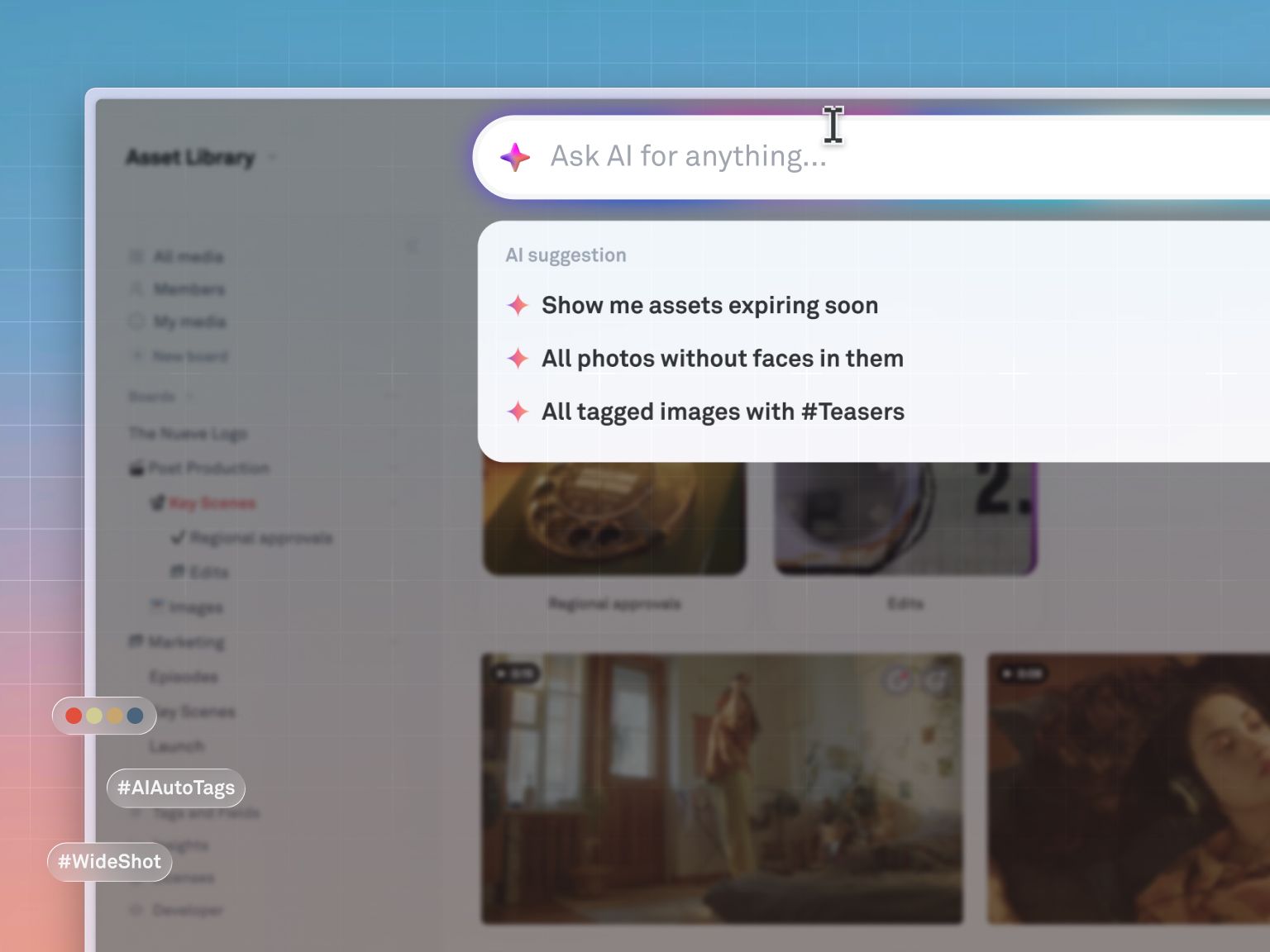
- AI asset intelligence. Every image, video, and file gets tagged across 16+ dimensions on upload, including visual style, color palette, campaign, product, talent, and usage rights, so nobody has to remember where "that hero shot from Q3" lives.
- Natural language search. An agentic search layer understands brand and creative context, not just filenames, and auto-clusters results into categories that match how marketing teams actually think about their library.
- Full-fidelity 3D product review. Through Playbook's integration with Miris, teams stream real 3D packaging and product renders directly in the browser, so a CMO on a phone and an agency partner on a tablet see the identical model and can pin feedback to the exact surface, with no GPU required on either end.
- Campaign version control across markets. Global campaigns generate dozens of localizations and legal revisions. Version stacking keeps every one intact, with side-by-side regional comparison, one-click restore, and a full compliance audit trail of who approved what, when, and for which market.
- Enterprise access control. Multiple brand libraries link under one organization while agencies and regional offices get scoped access to exactly what they need. SSO, granular permissions, and a full sign-in audit log mean access can be revoked instantly and completely the moment a relationship ends.
The same governance model extends across Playbook's media and entertainment and consumer brands workspaces, since enterprise marketing orgs often run broadcast content and product campaigns through the same library.
Enterprise example: launching a global campaign faster
Picture a global consumer brand launching a seasonal campaign across twelve markets: hundreds of localized product shots, several dozen legally-cleared video cuts, and social variants for each region's platform mix.
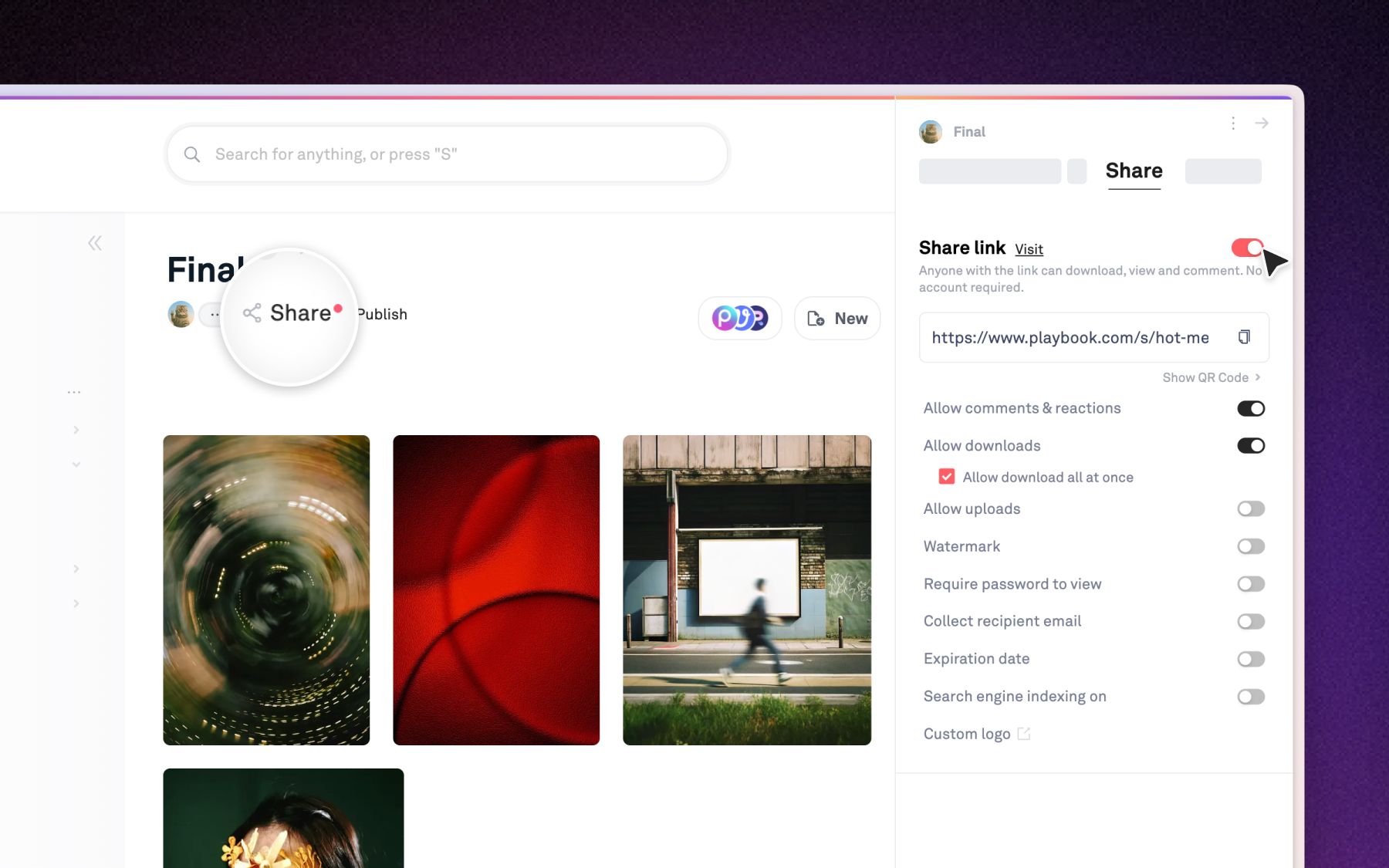
In shared drives, that usually means duplicate folders per market and nobody quite sure which cut cleared legal for which country. In Playbook, every regional variant is tagged, searchable, and versioned together. Legal pins comments directly to the frame that needs a change. The brand team publishes one portal per market that updates automatically the moment a source asset changes, so regional teams and agencies are always looking at the current, approved version.
The result: campaigns launch on schedule across every market, with a compliance trail intact and without a single "which version is live in Germany?" email.
FAQ
What is digital asset management for enterprise teams?
It's a centralized system that attaches metadata, version history, permissions, and approval status to every creative asset, so large organizations can find, govern, and reuse content across regions, brands, and agency partners without losing track of what's approved.
How is enterprise DAM different from standard cloud storage?
Cloud storage holds files. Enterprise DAM adds AI-powered tagging and search, automatic version control, SSO and granular permissions, and a full audit trail, which is what large marketing orgs need to stay compliant and on-brand at scale.
Does Playbook support SSO and enterprise-grade permissions?
Yes. Playbook's Business and Enterprise tiers include SAML SSO, granular and role-based permissions, multi-market library linking, and a full access audit log, with bring-your-own-storage available for organizations with existing infrastructure.
How much does enterprise DAM cost?
Playbook's Business plan runs a flat $400 a month for unlimited members, with 15TB of storage included, at the time of writing. Enterprise pricing is custom and includes bring-your-own-storage and dedicated onboarding. Confirm current numbers on the pricing page.
See how Playbook keeps enterprise campaigns on-brand at scale. Schedule a demo.