
TL;DR: Perforce Helix Core is the industry standard for versioning source code and large binary files in engineering and game-dev pipelines, but it was built for engineers, not the brand and marketing teams versioning campaign creative, decks, and video around that same codebase. Playbook is the Perforce alternative for creative asset version control: built-in version history with side-by-side compare on every Business and Enterprise workspace, transparent published pricing instead of a quote, and a REST API and MCP layer so technical teams can script the same workflows they'd reach for a CLI to do in Perforce.
Worth saying plainly: Playbook is not trying to replace Helix Core for engine source control or in-repo game binaries. That is genuinely Perforce's category, and the reason 9 of the top 10 game studios and semiconductor companies run on it. Where teams hit friction is everything Perforce was never built for: the brand guidelines, pitch decks, campaign photography, and marketing video that a creative or brand team versions right alongside the build, without wanting to learn Perforce's workflow, license a P4 seat, or open a support ticket to see what a plan costs.
That is the actual comparison. If the files you are versioning are source code or engine assets, Perforce is the right tool. If they are creative and marketing assets, a folder full of campaign_v6_FINAL files is not a Perforce problem, it is a missing library, and that is what Playbook is built to be.
Schedule a demo to see version history against your own asset library.
What is Perforce (Helix Core)?
Perforce Helix Core is an enterprise version control platform built to handle large, fast-growing codebases and binary files for software, game, and hardware development teams. It offers branching, merging, diffing, and file locking at a scale general-purpose version control tools struggle with.
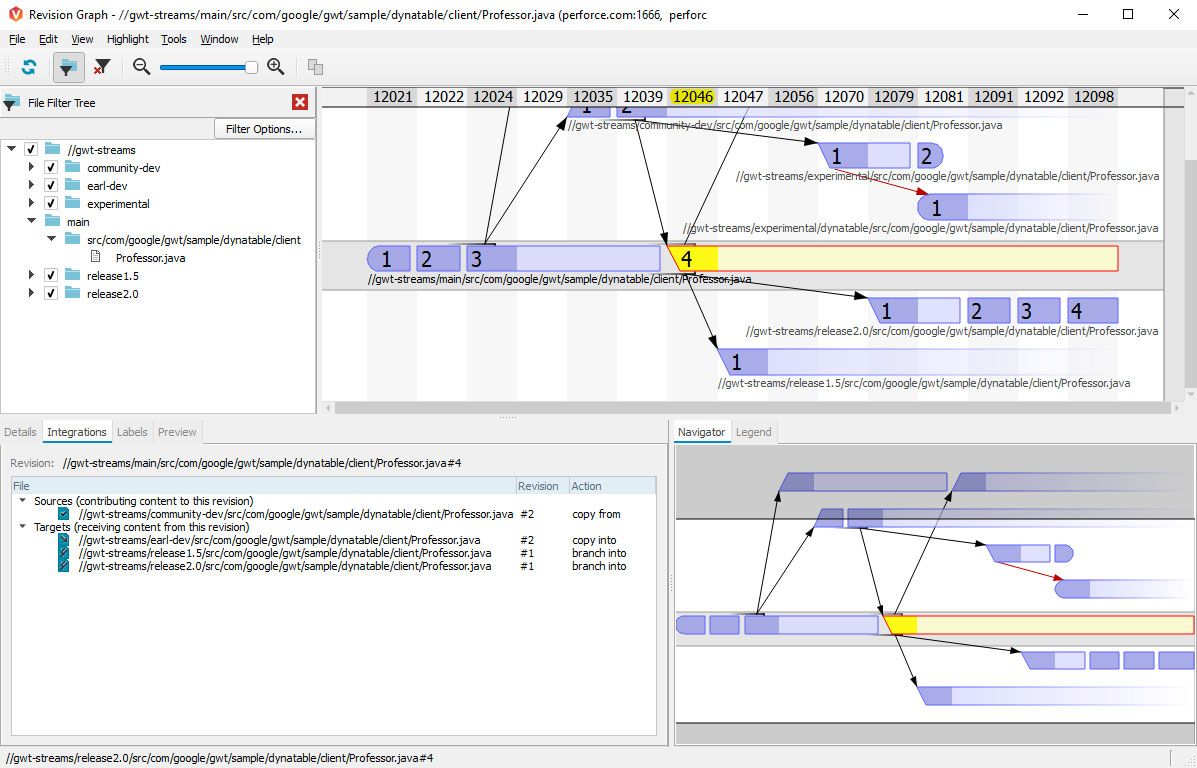
Strengths:
- Battle-tested branching, merging, diffing, and file locking for very large codebases and binary files
- Trusted at scale: Perforce reports 20,000+ customers including 75% of the Global 500 and 9 of the top 10 game and semiconductor companies
- Deep engineering-tool integrations (Unreal, Unity, Jenkins, Visual Studio, GitHub)
Limitations:
- No published pricing. Helix Core is sold as named or floating per-user licenses, subscription or perpetual, and Perforce does not publish a price list
- Built for engineers versioning code and binaries; there is no branded way to review, present, or publish creative work to a client or stakeholder from inside it
- The GUI client (P4V) is functional but not built for a marketer, brand manager, or agency partner to use day to day
Rating: 4.2 out of 5 based on 95 reviews of Perforce's P4/Helix Core product on G2 at the time of writing.
Pricing: Not published. Helix Core uses named or floating per-user licensing on a subscription or perpetual model, cloud-hosted or self-hosted, available only through a custom quote.
Playbook vs Perforce: feature comparison for creative asset management
| Playbook | Perforce Helix Core | |
|---|---|---|
| Pricing and accessibility | ||
| Published pricing | Published, from $0 (Free) to $4,800/year flat (Business) | No — quote-only per-user licensing |
| Free plan | Yes, 100GB / 300 assets, no card required | No |
| Onboarding | ||
| Self-serve signup | Yes, no sales call required to start | No |
| Feature set | ||
| Built for | Creative, brand, and marketing assets | Source code and engine binaries |
| Version history | Side-by-side compare and one-click revert (Business+) | Branching and merging |
| Client/stakeholder review tools | Timestamped and pinned comments, approvals, on every plan | None built in |
| Branded sharing / publishing | 1000+ template gallery, branded published pages | None |
| REST API / SDK | REST API, SDK, and MCP support | P4 command-line client and scripting API |
| SSO, audit log | Yes, SSO and audit log & export on Business and up | Yes (Enterprise deployments) |
What Playbook does that Perforce doesn't
Playbook is a digital asset management platform and full creative workflow platform, not an archival system with a nicer interface. For a brand, marketing, or creative operations team, that means version control that comes with review, sharing, and search built in, not just a diff.
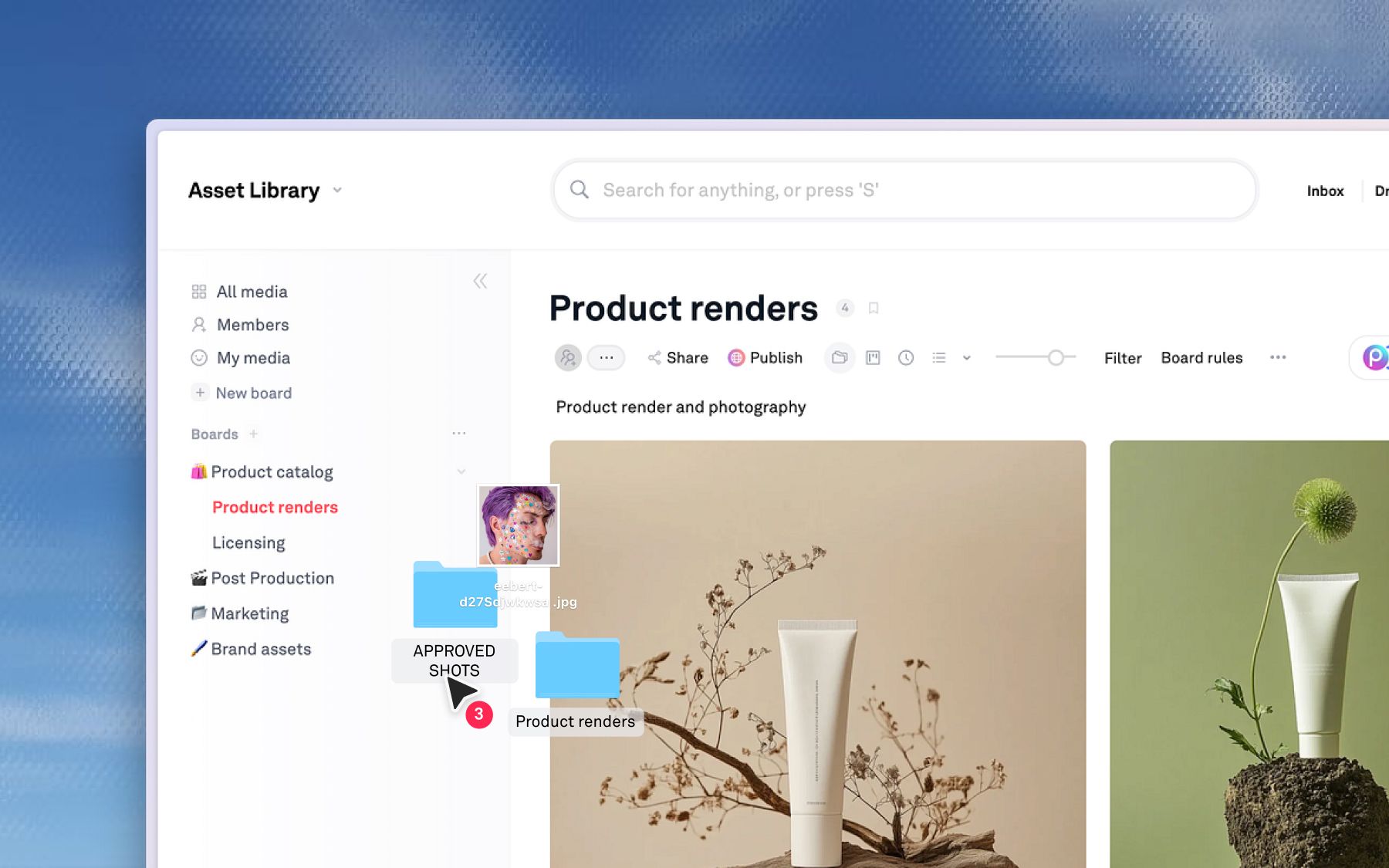
Built-in version history, with side-by-side compare
Every asset in Playbook keeps a full history of prior versions. Replace a file and Playbook snapshots the previous state (file, previews, title, and metadata) as an immutable revision, so an iteration layers onto the same asset record instead of spawning a new file named campaign_v6_FINAL. Open the Revisions panel to see the version history with thumbnail peeks, use side-by-side compare to check two versions against each other, and revert non-destructively to any earlier version, the pre-revert state is itself saved. Version history and management ships on Playbook's Business and Enterprise plans, alongside SSO and audit log & export, the same governance tier a Perforce-run enterprise already expects to budget for. Full walkthrough in the version history and compare tutorial.
Opendoor, which grew from 100 to 2,500+ employees, hit exactly the failure mode version-less asset sharing creates: outdated logos, naming inconsistencies, and lost historical assets during a platform migration. "It was a wake-up call," the team said. Moving brand assets into Playbook as the single source of truth cut asset search time by 50 to 70 percent, per the Opendoor story. Block Renovation, managing 250,000+ assets across market and project tags, called out version-aware brand guidelines specifically: "One thing that it seems like only Playbook does well is hosting brand guidelines and being able to preview the colors, what the color values are, and preview the fonts," per the Block Renovation story.
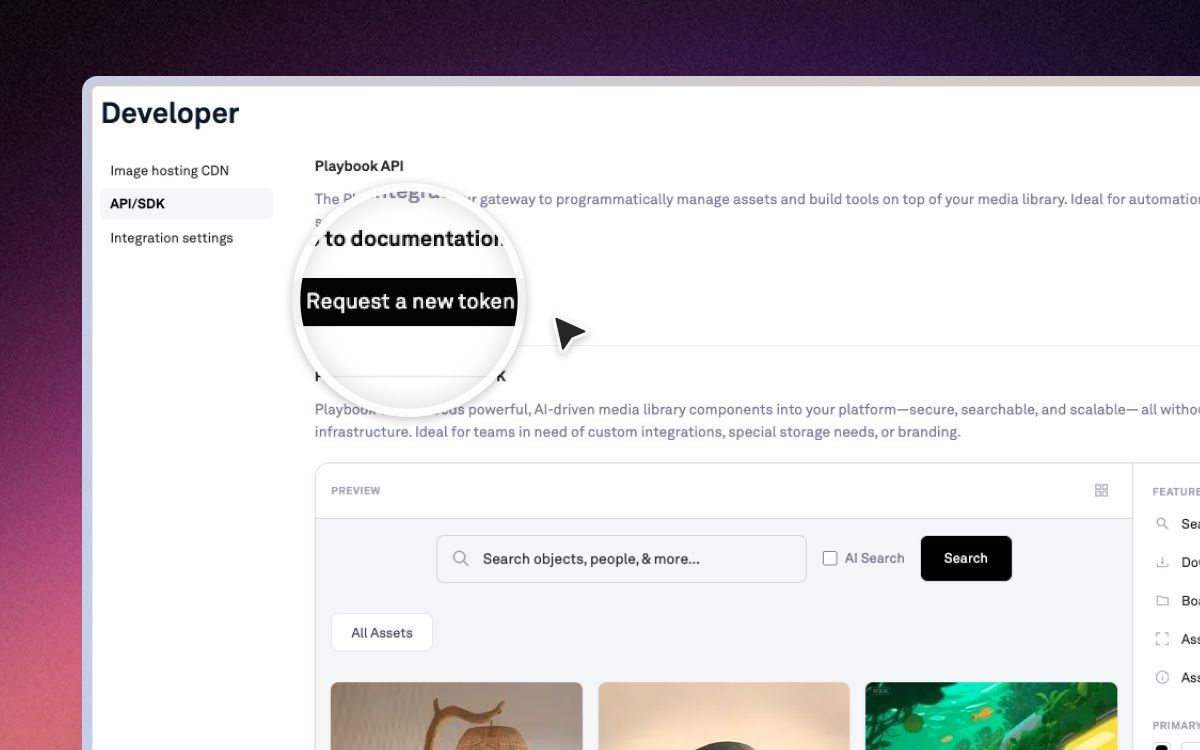
Build your own workflow with the Playbook API and MCP
A Perforce engineer scripts against P4's command-line client to automate a workflow. A marketing or creative ops team rarely has that option, and rarely wants a P4 seat just to sync brand assets. Playbook's REST API and MCP support give a technical team the same kind of programmatic control over the creative library: read and mutate assets, boards, comments, and search over REST, or connect an MCP-capable agent (Claude, Cursor, and others) so it can organize uploads, tag incoming files, or manage boards from a prompt instead of a script. Sync approved brand assets out to a CMS, auto-file campaign deliverables as they land, or trigger a review the moment a new version uploads, all addressable the way an engineering team already expects a system to be, without learning Perforce's own workflow to do it.
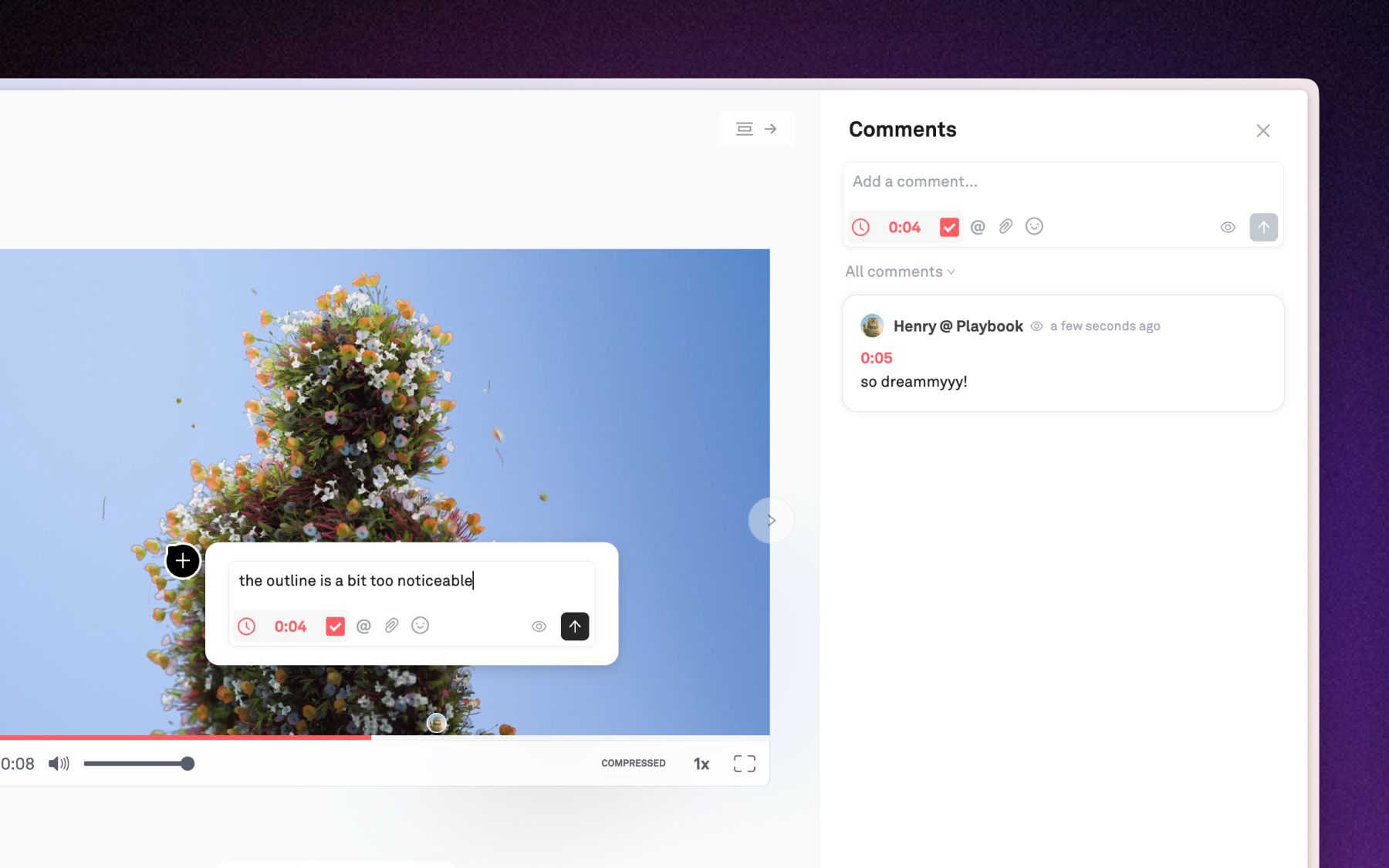
Review and feedback that Perforce doesn't have
Version history without review is half the workflow. Comments in Playbook auto-attach to the exact frame and timecode on video, or pin to a point, box, or freeform region on an image, so a stakeholder marking up a campaign asset points at the exact spot that needs a change, on every plan including Free. Perforce has no equivalent for a marketer or brand manager reviewing creative work.
Branded delivery, not a checkout
Once a version is approved, Perforce has no path for sharing it externally. Playbook publishes any board as a branded page from a 1000+ template gallery, in a drag-and-drop builder, so a brand portal or campaign deliverable goes out looking finished instead of like a file checkout.
Pricing and access
Playbook publishes every tier: Free (100GB, 300 assets, no card), Pro at $120/year, Team at $240/year/member, Business at $4,800/year flat with unlimited members, SSO, audit log, and version history, and custom Enterprise with bring-your-own-storage and dedicated onboarding. No quote required to see a number, unlike Perforce's per-seat licensing.
What to look for in a Perforce alternative for creative assets
- Is the tool actually built for engineers or for creatives? A version control system built for source code will always feel like a workaround for a marketing team.
- Does version history come with review built in? A diff is not feedback. Look for comments pinned to a frame or pixel, not just a change log.
- Can non-technical stakeholders use it without training? If sharing a version externally requires a technical hand-off, that is a bottleneck the tool created.
- Is pricing published? Quote-only licensing makes budgeting a moving target; a published price per tier does not.
- Can your technical team still automate it? An API and MCP layer means engineering can script the creative library the same way they would script anything else, without forcing marketing onto engineering's tool.
See version history against your own library
Playbook gives brand, marketing, and creative operations teams the version control discipline of Perforce, built for the assets Perforce was never meant to manage: with review, branded sharing, and an API and MCP layer to build on top of. Schedule a demo and bring your own asset library.
Frequently asked questions
What is the best Perforce alternative for creative and marketing teams?
Playbook is the strongest fit when the files being versioned are creative and marketing assets, not source code or engine binaries. It pairs built-in version history and side-by-side compare with review tools and branded sharing that Perforce does not offer.
Does Playbook replace Perforce for game development or source code?
No. Perforce Helix Core remains the right choice for versioning source code and in-engine binary assets at scale. Playbook is built for the creative, brand, and marketing assets a team manages alongside that codebase, not inside it.
Does Playbook have version history like Perforce?
Yes. Every asset keeps a full version history with thumbnail previews, side-by-side compare between versions, and non-destructive one-click revert, available on Playbook's Business and Enterprise plans.
How much does Perforce Helix Core cost?
Perforce does not publish pricing. Helix Core is licensed per named or floating user on a subscription or perpetual model, quoted individually, at the time of writing.
Does Playbook have an API for automating asset workflows, like Perforce's command-line client?
Yes. Playbook's REST API and MCP support let a technical team read and mutate assets, boards, and comments programmatically, or connect an AI agent to manage the library from a prompt, without a P4 seat.
Can external stakeholders review versions in Playbook without a Perforce-style client?
Yes. Guests comment, review, and download on every Playbook plan, including Free, without a paid seat or any client software to install.