
Playbook is a digital asset management API you drop in as the headless backend for your own app or product. Instead of standing up object storage, building a search index, and running a CDN, then maintaining the glue between all three, you call one REST API for assets, boards, custom fields, and AI-powered search. Every file comes with a permanent CDN link. Authentication is a bearer token. The examples are TypeScript. Your own AI agents can act on the library over MCP. Point it at your product and ship the media feature this quarter, not next year.
Three services collapse into one backend
A headless DAM backend is really three systems wearing a trench coat: storage, search, and a CDN. Build it yourself and you own all three forever, plus the plumbing in between.
Playbook is the API-first version of that stack. Uploading an asset is a POST. Reading, filtering, moving, and sharing are all REST. Boards give you structure, custom fields give you a taxonomy, and search sits on top of everything. You write product code. Playbook is the media library backend. Walk the digital asset management example for the full request-by-request build, or browse the API reference.
Want to see it against your own stack? Schedule a demo.
Search is the part you really do not want to build
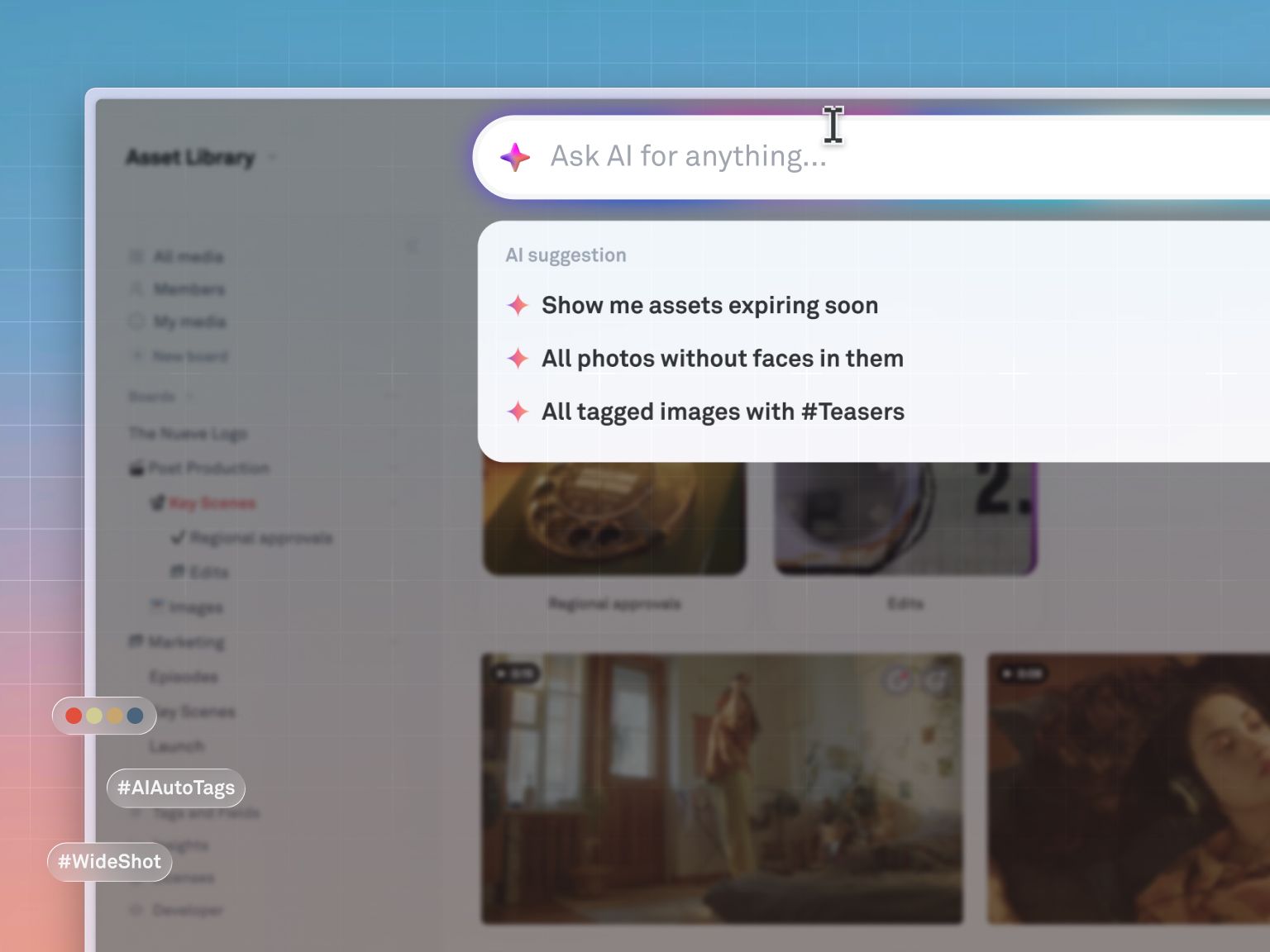
Search is where a homegrown DAM quietly turns into a second full-time project. Playbook's search is AI-powered and works on what files actually look like, so a description is a valid query.
One GET call to the search endpoint runs a hybrid of semantic and full-text matching. Playbook relies on OpenCLIP to generate embeddings and GPT to process queries, so "moody product shots on a concrete backdrop" returns the right assets without anyone tagging them by hand. It is the same GPT-powered search that ships in the Playbook app, now exposed to your code. Your users talk to your files. You never stand up a vector index.
Your agents get a backend too
Playbook speaks Model Context Protocol, so the same library your API reads is one your AI agents can act on directly.
Point an MCP-capable agent (Claude, Cursor, or your own) at a workspace and it can search, organize uploads, tag, and share without a bespoke integration. Webhooks close the loop: register an endpoint and your downstream systems stay in sync as assets are created and updated. This is the SDK and API surface built for teams that automate instead of click.
What powers it
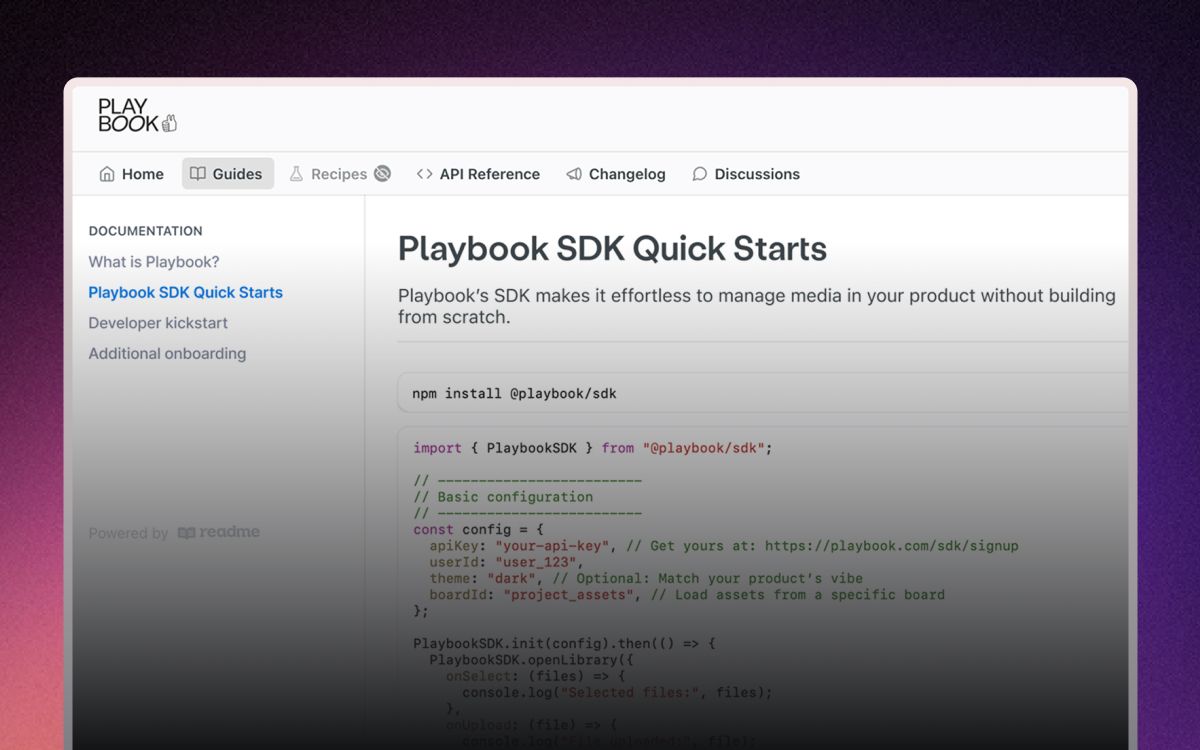
Every call authenticates with a bearer token against https://api.playbook.com/v1/.
- Ingest assets:
POST /v1/$ORG/assets - Update fields as work moves:
PATCH /v1/$ORG/assets/{id}/update - AI-powered search:
GET /v1/$ORG/search - Define your taxonomy:
POST /v1/$ORG/custom_fields - Sync downstream systems (webhooks):
POST /v1/trigger - Permanent, resizable CDN links for any asset
- MCP support for agent-driven workflows
This is the same platform that runs asset ops at scale for teams like Opendoor, where 10,000+ brand assets live in Playbook and staff report 50 to 70% less time hunting for files. The backend is proven. You are just calling it from your app instead of clicking it.
Developer FAQ
Which plan includes API access?
REST API developer access is available on Playbook's paid plans, starting at Pro at the time of writing, with SDK access on higher tiers. Tiers, call limits, and entry points change, so confirm the current details on the pricing page before you build.
Can I use Playbook as a headless DAM?
Yes. Every asset, board, custom field, and search runs through the REST API, so you can run Playbook purely as a headless digital asset management backend behind your own UI. Your product renders the front end. Playbook stores, indexes, and serves the files.
What does the search API actually search?
The search endpoint runs hybrid semantic and full-text matching over your library. It reads what images and video look like, not only filenames and tags, using OpenCLIP embeddings and GPT query processing. Describe an asset in plain language and get it back.
Can I connect my own AI agents?
Yes. Playbook supports Model Context Protocol, so an MCP-capable agent can search, organize, tag, and share assets in a workspace directly. Combined with webhooks, agents can react to new uploads and keep other systems current without custom glue for each one.
Stop maintaining storage, search, and a CDN you never set out to build. Point Playbook at your product and ship. Schedule a demo.