
A single production can generate thousands of clips across dozens of shoot days, and every one of them needs to be findable months later by scene, subject, or a single line of dialogue. Folder structures and filenames were never built to hold that kind of detail, so production teams end up scrubbing through hours of footage to find a shot they know exists somewhere.
That's the gap digital asset management (DAM) closes for media and entertainment teams. Playbook indexes footage the moment it's uploaded, at the shot level, so a production's entire archive becomes searchable by what's actually in the frame.
From bottlenecks to broadcast-ready
WBD Sports produces the marketing behind TNT Sports, Eurosport, and Bleacher Report, moving AV promos, statics, and federation assets across continents on tight broadcast timelines. Before Playbook, assets were split across SharePoint and Google Drive, and legal review happened over Zoom screenshares with feedback like "this part needs a tweak" and no way to know which part, or which frame.
"You could lose an entire morning just trying to decode it," said David Bret, VP of Marketing for WBD Sports EMEA.
Once WBD Sports centralized production assets in Playbook, legal began leaving timestamped comments pinned to the exact second and pixel of a video. Review cycles that used to take four rounds now close in two, and internal asset requests dropped by at least half. "It's asynchronous, exact, and more human," David said. "You can see exactly what needs to change without interpreting vague comments."
How media and entertainment teams win with Playbook
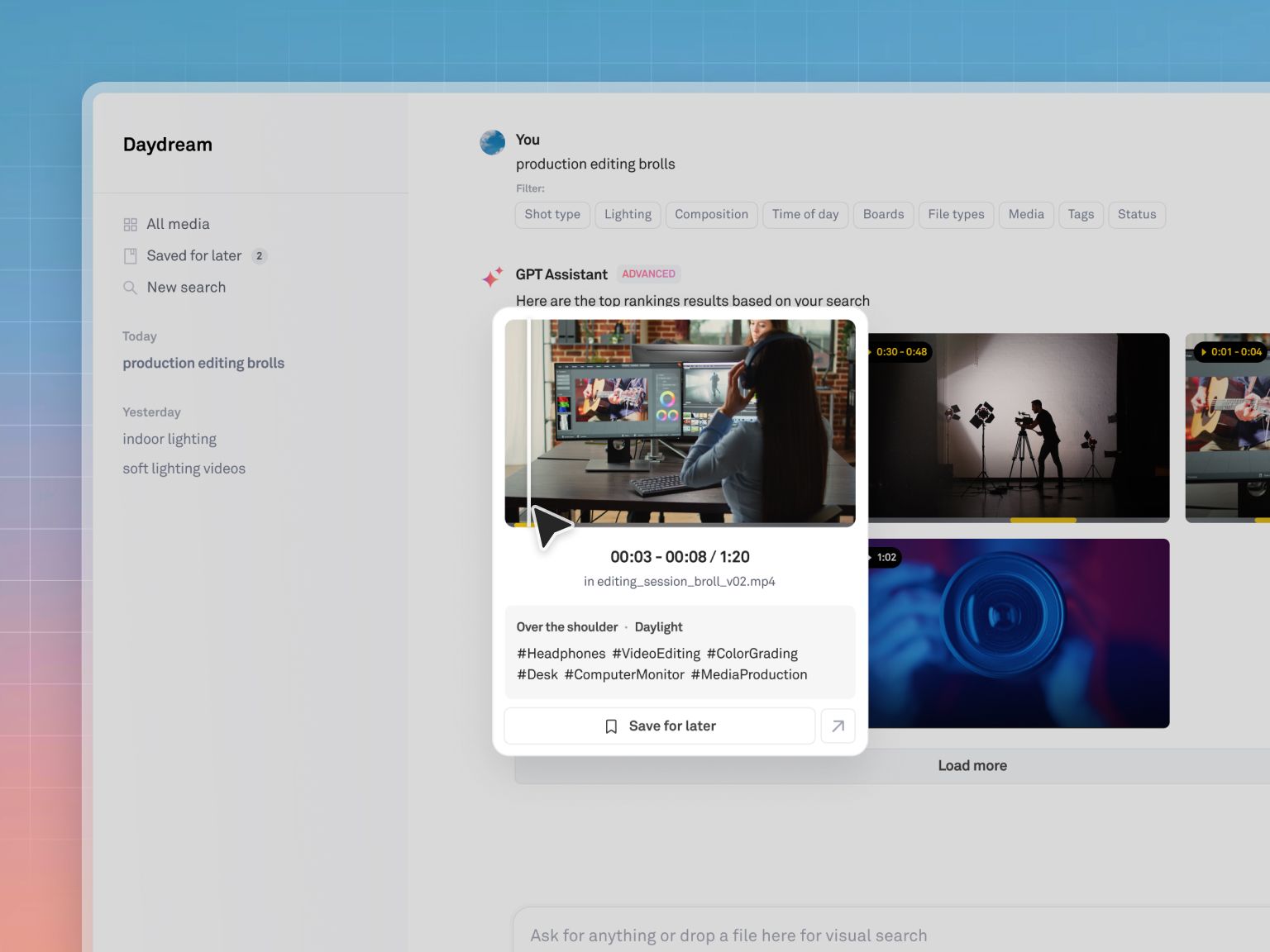
- AI shot-level autotagging. The moment a clip lands in the library, Playbook breaks it into shots and tags scale, angle, framing, motion, lighting, environment, and subjects across 16+ dimensions, so nothing depends on a cryptic filename.
- Natural language, shot-level smart search. Type a description like "scenes where a man is washing his face" and Playbook surfaces every matching shot across the entire archive, with auto-clustering into full videos, individual shots, episodes, and metadata views.
- Spatial 3D review, powered by Miris. Instead of exporting a flattened turntable video that loses material detail, Playbook streams the actual 3D asset in the browser. A creative director on a laptop and an external partner on a tablet see the identical full-fidelity model at the same time, with no GPU required on either end.
- Version control and audit history. Built-in version stacking keeps every iteration inside one asset view, with side-by-side comparison, one-click restore, and a full record of who uploaded what, when, and from which agency.
- Membership and permissions built for productions. Multiple media libraries link under one organization while full-time crew, external agencies, and partners get scoped access. When a vendor wraps, access revokes cleanly and instantly.
Studios running large-scale releases alongside broadcast content often pair this with Playbook's game studio and enterprise workspaces, since the same shot-level search and version control apply to game cinematics and marketing footage alike.
Media example: finding one take in a season's worth of footage
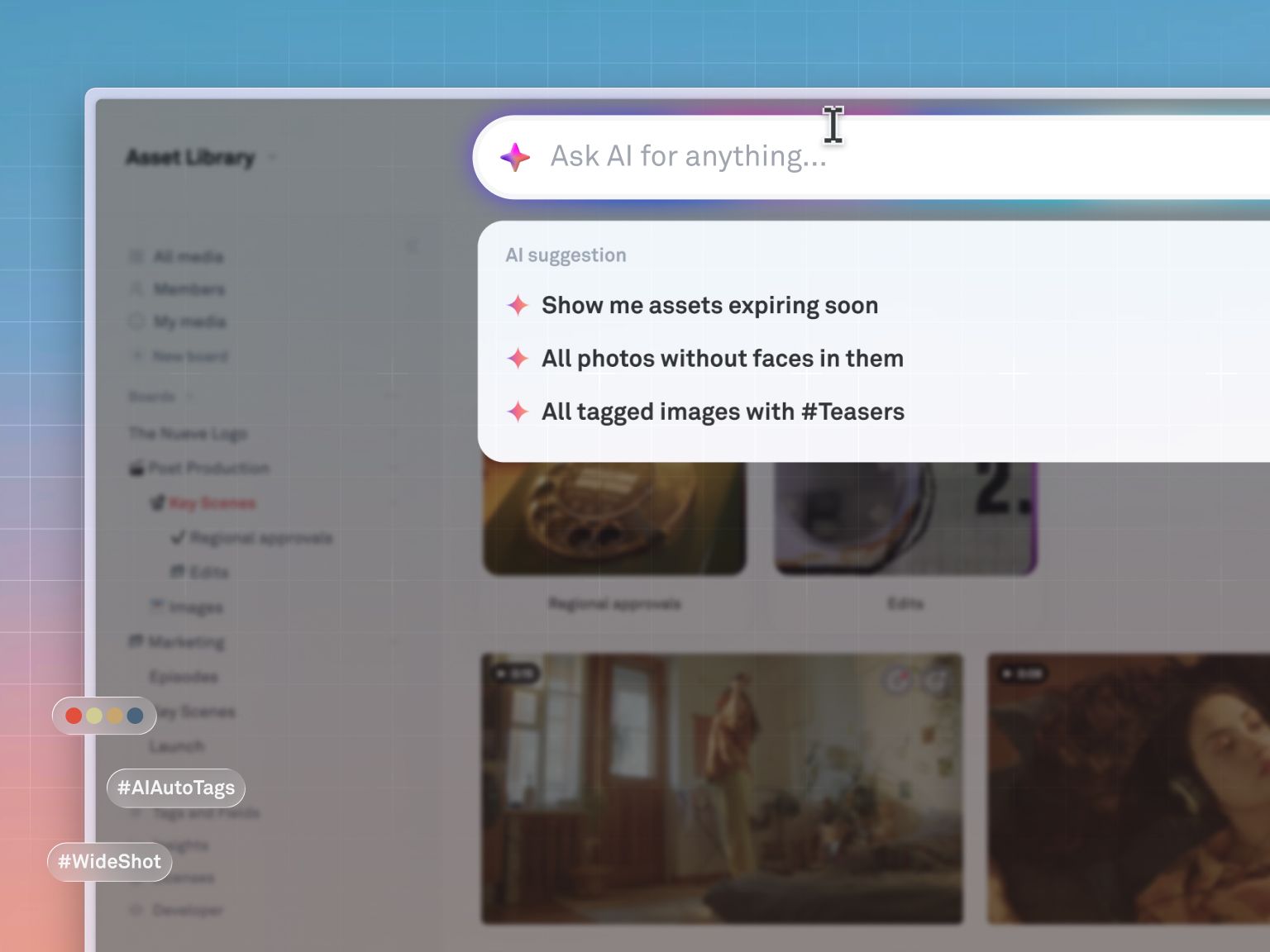
Picture an editor working on a documentary series who needs the exact take where a subject says a specific line, somewhere inside a season's worth of interview footage.
The old way means scrubbing through file after file, hoping the editor remembers roughly which session it came from. In Playbook, she types the phrase into search, and the transcript-level indexing surfaces the exact clip and timestamp. She previews it with frame scrubbing, confirms it's the right take, and drops it into the cut, all without opening a single unrelated file.
FAQ
What is DAM for media and entertainment teams?
It's a system that indexes video and production assets at the shot level, tagging objects, scenes, and dialogue automatically on upload, so editors and producers can search an entire archive by content instead of relying on filenames and folder memory.
How does shot-level search differ from clip-level search?
Clip-level search only tells you which file might contain what you need. Shot-level search, like Playbook's, breaks each clip into individual shots and tags each one, so a query returns the exact moment rather than an entire file to scrub through.
Can teams review 3D assets without rendering a proxy video?
Yes. Playbook's integration with Miris streams full-fidelity 3D assets directly in the browser, so reviewers inspect the real model, not a flattened video export, and feedback pins to exact coordinates on the asset itself.
How much does Playbook cost for a production team?
Playbook's Team plan starts at $20 a month per member (billed annually) and includes AI shot tagging and conversational search. Larger studios typically move to Business, at a flat $400 a month for unlimited members. Confirm current rates on the pricing page, since plans do change.
See shot-level search on your own footage. Book a studio demo.