
If you are weighing the best Air alternatives for consumer brands, here is the short version. Air.inc is a genuinely good modern DAM, and the reasons a CPG or DTC brand shops around are usually practical ones: cost as the collaborator list grows, a need for deeper findability, or a better way to hand finished assets to retailers and agencies. For a consumer brand, the strongest options are Dash for small DTC teams, Canto and Brandfolder for mid-market brand libraries, Bynder for global CPG, and Playbook for teams that want to organize product shoots, find assets by look, and share them out without paying per collaborator.
Air earned its reputation. It is clean, fast, and pleasant to use, with AI tagging and search that growing brands genuinely like. None of what follows is a knock on Air. It is a map of where a consumer brand's needs can outgrow one tool, and which alternative fits each job.
The pattern is specific to consumer brands. The bigger a brand gets, the messier its assets get: product shots, packaging files, and campaign creative pile up across markets, photographers, and influencers faster than anyone can file them. The tool that stores your library is not always the tool that finds the right SKU, keeps rights straight, and puts a polished gallery in front of a retail buyer.
We line up five alternatives worth a serious look, then Playbook, which reframes the question. Want a walkthrough of your own library first? Schedule a demo.
1. Dash: best for small DTC and ecommerce brands
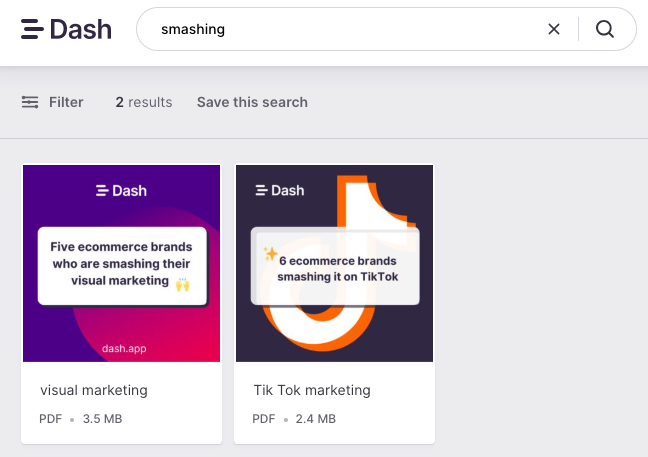
Dash is an affordable, ecommerce-focused DAM built for small direct-to-consumer brands that want product content organized and pushed straight to their storefront. It is one of the closest Air.inc alternatives for DTC teams that found a bigger platform richer than their size or budget called for.
Strengths
- AI tagging plus custom fields for product line, campaign, usage rights, and photographer
- Resize, crop, and push product images straight into Shopify listings
- Transparent, published pricing with unlimited users on every plan
Limitations
- Built for smaller teams, so it stretches thin across large multi-brand portfolios
- Fewer advanced governance and permission controls than enterprise tools
- Less of a presentation-grade surface for handing polished galleries to retailers
Dash rates around 4.5 out of 5 on G2 at the time of writing. Pricing starts near $99 per month with unlimited users, at the time of writing.
2. Canto: best for mid-market brand libraries
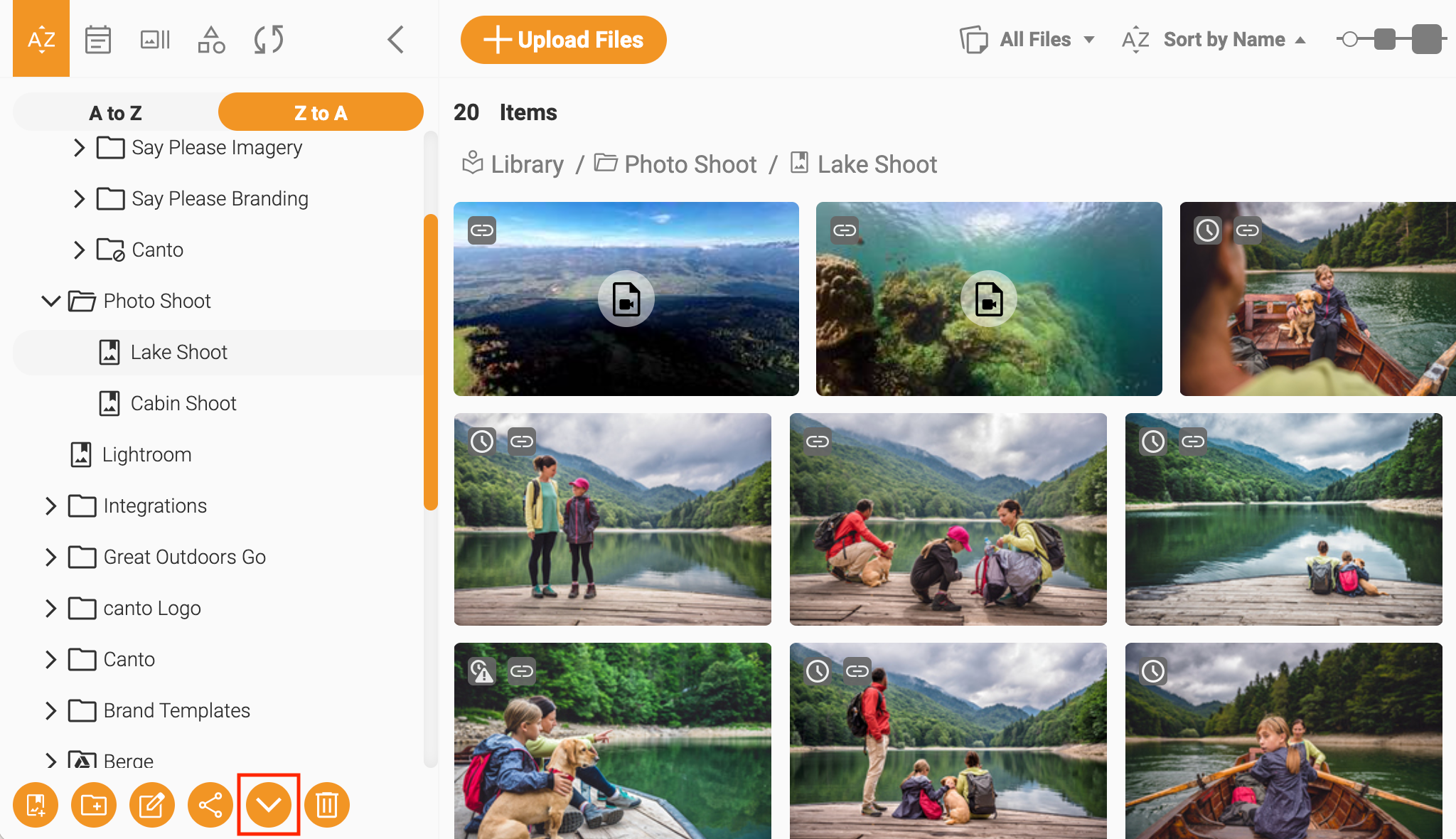
Canto is an established digital asset management platform for mid-market brand, marketing, and product teams that need a single source of truth for approved, channel-ready assets. It supports thousands of retail and consumer brands and scales well past a lightweight tool.
Strengths
- Mature library structure, portals, and granular permissions
- Strong tagging and metadata for large product catalogs
- Broad integrations across the marketing and commerce stack
Limitations
- Setup and administration take real effort to get right
- The interface feels more utilitarian than a newer tool
- Pricing is quote-based, so budgeting starts with a sales call
Canto holds a strong score on G2, around 4.5 out of 5 at the time of writing. Pricing is not published and is quoted per team, at the time of writing.
3. Brandfolder: best for brand consistency at scale
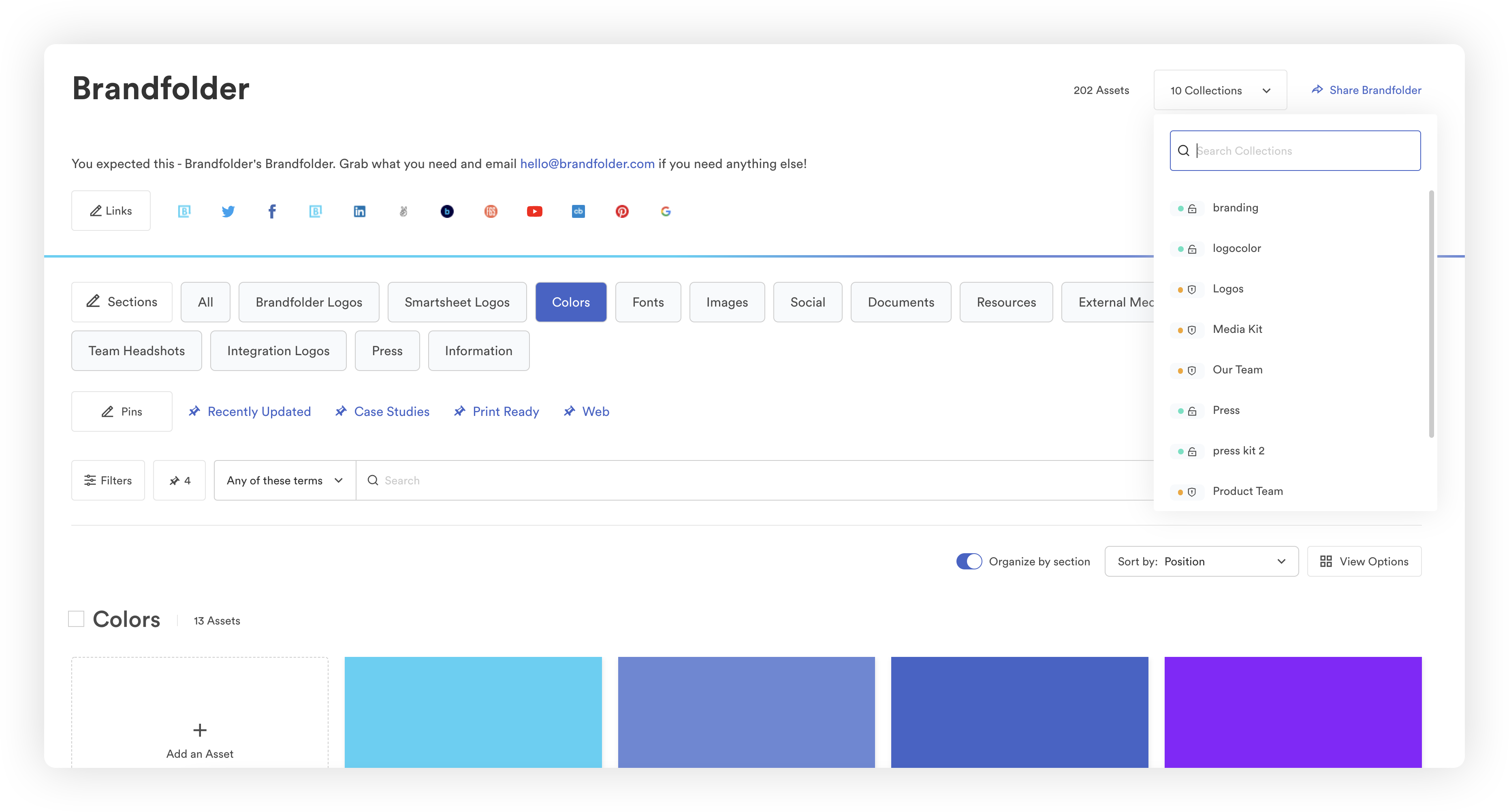
Brandfolder, part of Smartsheet, is a DAM aimed at brand consistency and guideline governance for larger consumer brands that distribute assets to many partners. It pairs a polished library with brand portals and usage analytics, and works as an Air alternative for CPG brands that lead with brand control.
Strengths
- Strong brand portals and guideline enforcement
- Usage analytics showing which assets partners actually use
- Deep integration with Smartsheet workflows
Limitations
- Enterprise pricing and onboarding, more than a small brand needs
- Heavier administration than a self-serve tool
- Quote-only pricing makes cost hard to compare against a free-to-try option
Brandfolder rates 4.4 out of 5 on G2 at the time of writing. Pricing is not published; custom quotes are reported to start in the low thousands of dollars per year, at the time of writing.
4. Bynder: best for global and enterprise CPG
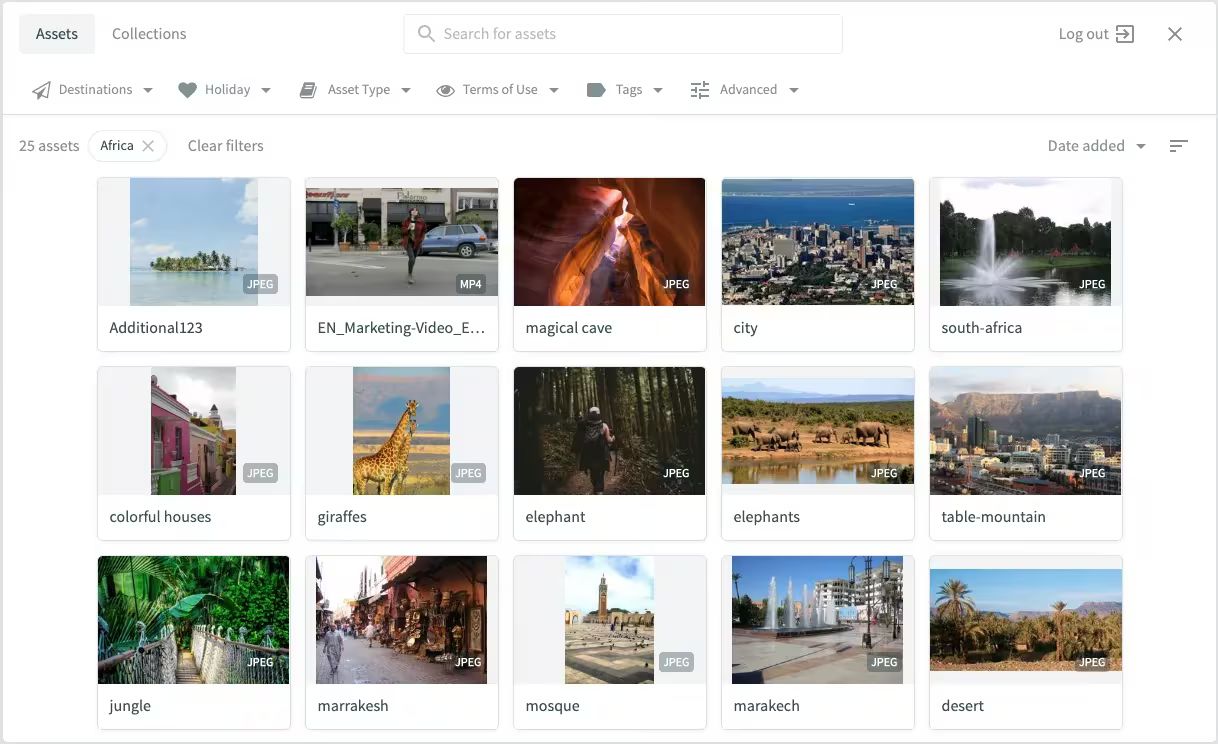
Bynder is an enterprise DAM built for global CPG and consumer brands managing large, multi-market libraries with formal governance. It is a category leader for big organizations rather than small teams, and it was named a Leader in the 2025 Gartner Magic Quadrant for Digital Asset Management.
Strengths
- Robust governance, roles, and multi-market brand management
- Strong integrations and workflow automation
- Deep track record with large consumer and retail brands
Limitations
- Enterprise pricing and multi-week implementation timelines
- Heavier than a growing brand usually needs
- Quote-based pricing plus setup fees, so the true cost takes a while to surface
Bynder rates 4.5 out of 5 on G2 at the time of writing. Pricing is quote-based, reported to run from roughly $500 to $1,600 or more per month plus implementation, at the time of writing.
5. Cloudinary: best for programmatic product image and video delivery
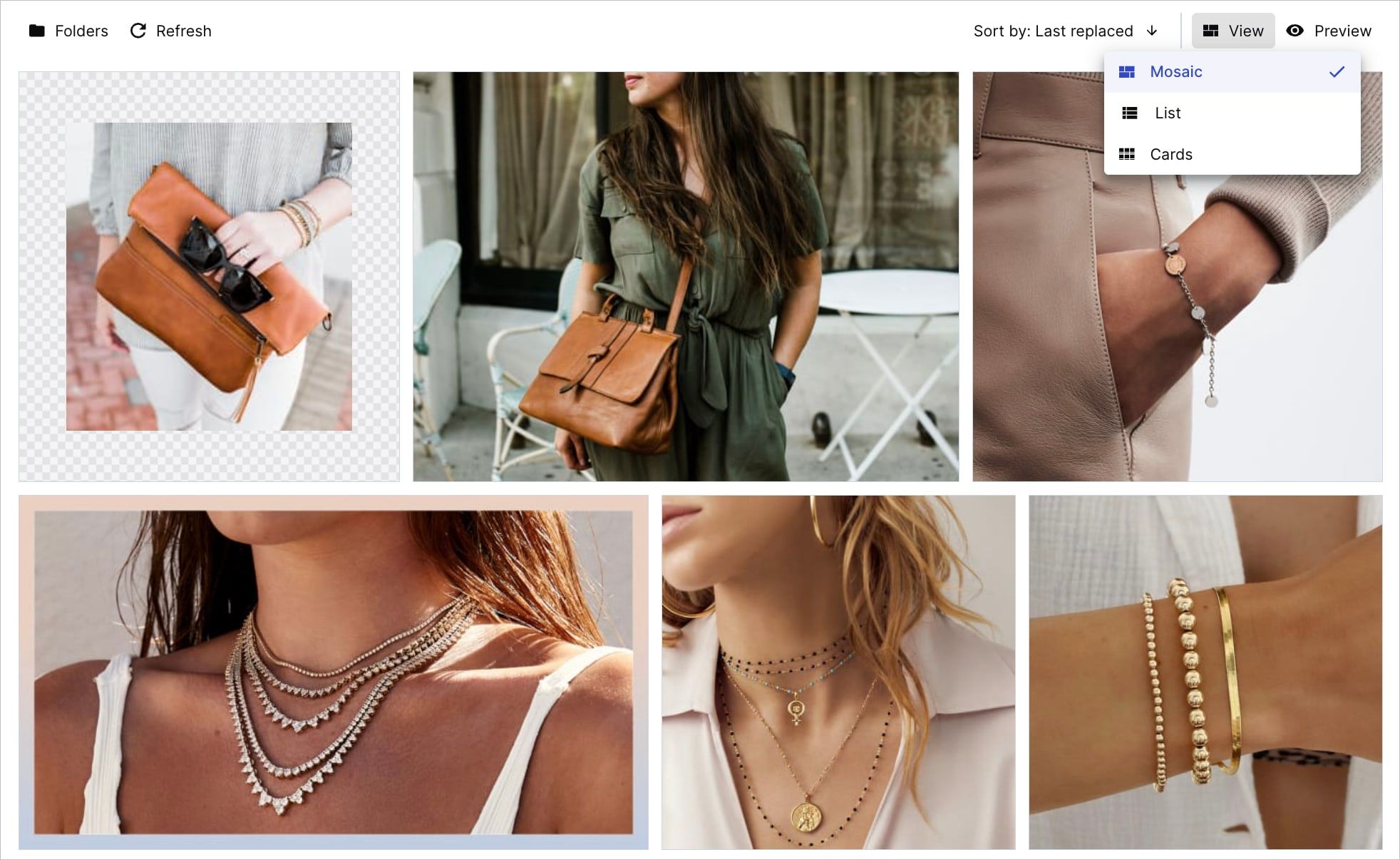
Cloudinary is an image and video delivery platform that optimizes and serves product media at scale, popular with ecommerce and engineering teams. It is a product photography DAM in the delivery sense: transformations, CDN, and automation rather than a library your brand team browses.
Strengths
- Powerful on-the-fly image and video transformations
- Fast CDN delivery tuned for storefront performance
- Developer-friendly APIs for automating product imagery
Limitations
- Built for developers, not brand managers doing daily creative work
- Costs can climb unpredictably with transformations and bandwidth
- It is a delivery pipeline, not a place your team finds a shoot by look and hands a finished gallery to a retailer
Cloudinary rates 4.4 out of 5 on G2 at the time of writing. Pricing includes a free plan, Plus at $89 per month, Advanced at $224 per month, and custom Enterprise, at the time of writing.
Playbook: a visual home for your product library, not just storage
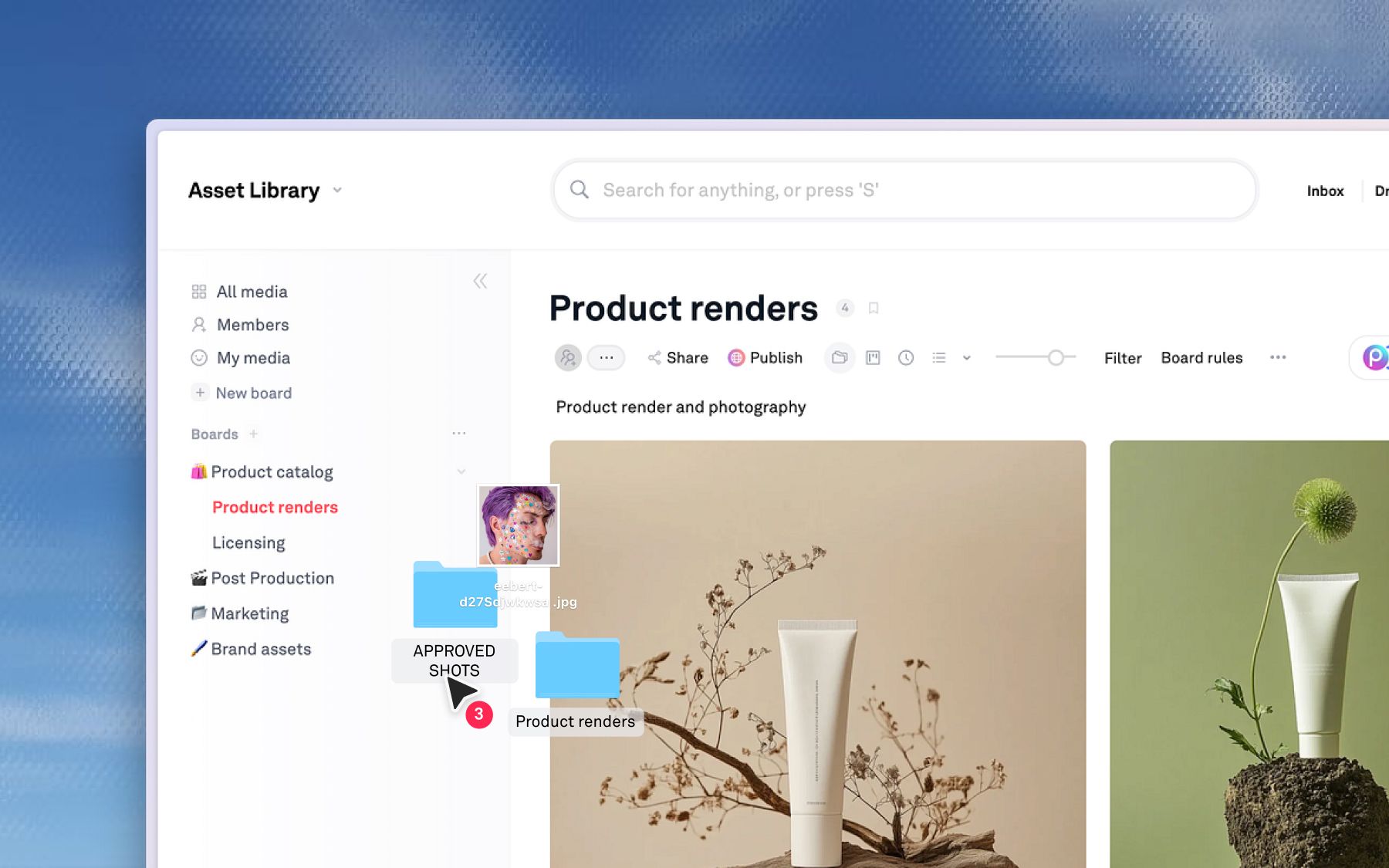
That last gap, a place your brand team actually organizes, finds, and hands off creative, is where Playbook comes in. Playbook is a digital asset management platform and creative workflow platform built for the way consumer brands really work. It answers a different question than most tools on this list. Not "where do the files sit," but "how does a small team keep a growing catalog findable, on-brand, and easy to share to retailers, agencies, and social."
Start with the job. A DAM for consumer brands has to organize product shoots and SKUs, surface the right asset fast, keep usage rights straight, and deliver polished work outward. Playbook does each of those as one motion:
- AI auto-tagging. The moment an asset lands, Playbook tags every image and video across 16-plus dimensions, including style, color, campaign, product, and talent, so your library knows what is in it without anyone stopping to file.
- Custom trained and SKU tags. Teach Playbook your product names, SKUs, and campaign codes once, and it finds every asset they belong on. Typed custom fields like status and campaign double as filters.
- Visual and conversational search. Search by what an asset looks like, not its filename: ask for "minimalist product shots on white" and get results by actual visual content. The conversational Playbook Intelligence layer is currently in private beta.
- Client galleries and brand portals. Turn any board into a branded product catalog, brand portal, or client gallery from 1000-plus templates, so retailers and agencies get a considered page, not a file dump.
- Licensing and rights. Attach copyright, usage terms, license PDFs, and expiration dates to the asset itself, so rights travel with the work instead of a separate contract.
- Permanent CDN links. Give any product image a permanent, resizable public URL you can hotlink into a storefront, a retailer's system, or an email.
Consumer brands already run this way on Playbook. SuperMush, the Gen Z functional-mushroom brand, pulled 2,000-plus scattered images into one workspace organized by product and campaign. As their team put it, "We had all these great photos and no way to use them." Dyla Brands, the beverage portfolio behind Stur and Happy Viking with 15,000-plus assets across a 60-plus person team, now gives sales and partners tiered access to export retail-ready sizes on their own. In their words, "Having a visual presence goes a really long way versus just folders."
Then there is the part that matters most to a growing brand: what it costs. Playbook publishes every price. The free plan is genuinely usable at 100GB and up to 300 assets with no card, Pro runs $120 per year, and Team, where AI tagging and conversational search unlock, is $240 per year per member, all at the time of writing. Guests comment, review, and download without taking a paid seat: the Free plan includes three, and paid plans are unlimited at the time of writing. Growth scales with your team, not your collaborator list.
What to look for in an Air alternative for consumer brands
The right pick depends on which job your current tool is failing at. Five criteria matter most for a consumer brand.
- Findability, not just storage. Can you find a product shot by what it looks like, or only by remembering its filename and folder? A real DAM for ecommerce brands makes the library searchable by subject, SKU, and campaign the moment assets upload.
- Who does the filing. If a person has to tag every asset by hand, the system decays. Look for AI tagging that describes assets automatically and lets you layer your own SKU labels on top.
- What happens after approval. Review is a moment; the library is forever. The tool should turn an approved board into a branded gallery or product catalog you can send to a retailer or agency without a separate website.
- Rights that travel with the work. Usage terms, license PDFs, and expiration dates belong on the asset, so nobody ships an expired image by accident.
- Pricing you can actually plan around. Published prices, a real free plan, and guests who never take a paid seat beat a quote-only wall, especially for a brand watching its budget as it grows.
Weigh those against your team, and a consumer brand that cares about all five usually ends up with Playbook on the short list.
Frequently asked questions
What is the best Air alternative for a small consumer brand?
For a small DTC or ecommerce brand, the best fit is usually a tool with transparent pricing and easy setup. Dash is a strong ecommerce-focused option, and Playbook adds AI search, branded galleries, and free guests, with a usable free plan to start on at the time of writing.
Is there a free or cheap Air alternative for consumer brands?
Yes. Playbook has a usable free plan at 100GB and up to 300 assets with no credit card, then $120 per year for Pro, at the time of writing. Dash starts near $99 per month with unlimited users. Enterprise tools like Bynder and Brandfolder are quote-based and cost more.
What is the best DAM for product photography and SKUs?
Look for a product photography DAM that tags assets automatically and lets you train tags on your own SKUs. Playbook auto-tags across 16-plus dimensions, learns your product and campaign labels, and adds typed custom fields, so a growing catalog stays findable by SKU, campaign, and look.
How is Playbook different from Air for consumer brands?
Air is a polished DAM focused on storing and reviewing assets. Playbook focuses on the motion after that: finding assets by look, keeping rights straight, and delivering branded galleries to retailers and agencies. See the Playbook and Air comparison for a side-by-side.
Your product library should feel like a living catalog, not a folder maze. See how Playbook organizes your shoots, finds any asset by look, and hands it off cleanly. Schedule a demo.